
Gauging Hand Safety: How Glove Gauge Affects Performance
When it comes to work gloves, the right fit goes beyond just size. A glove's comfort, flexibility and level of protection are all influenced by an important factor: gauge.
From lightweight precision gloves to heavy-duty hand protection, glove gauge helps determine how a glove performs in different environments and understanding it can help determine which glove is best suited for the work at hand.
So what exactly is glove gauge and why does it matter? Let's break it down.
Understanding Glove Gauge in Work Gloves
Glove gauge refers to the thickness and density of the knit material used to make a glove liner. More specifically, it’s the number of stitches knitted into each inch of material.
The rule is simple:
- Lower gauge = thicker, heavier gloves
- Higher gauge = thinner, lighter gloves
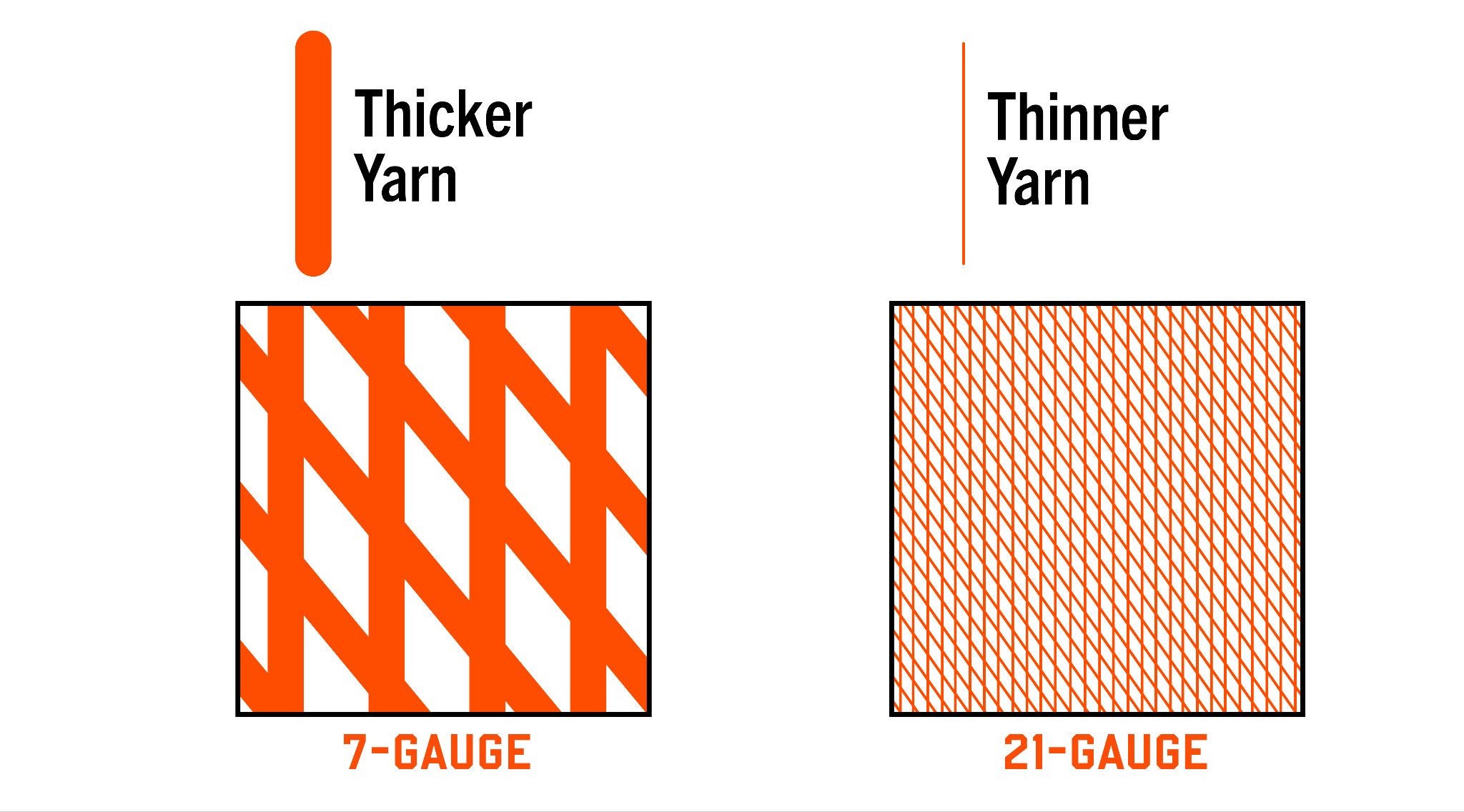
For example, a 7-gauge glove uses thicker yarns and fewer stitches per inch, creating a bulkier glove built for durability and protection; while a 21-gauge glove uses finer yarns and more stitches per inch, resulting in a lightweight glove with increased dexterity.
How does Glove Gauge Affect Performance?
There’s no “best” glove gauge across the board. The right gauge depends on the work being done, the hazards involved and the materials used in glove production.
Workers handling rough materials, sharp edges or heavy-duty applications may need a thicker glove with more cushioning and durability. On the other hand (literally), tasks that require precision or repetitive hand movement often benefit from thinner, more flexible gloves.
In short, gauge helps determine the balance between protection, dexterity and durability. But as we’ll touch on next, the distinction isn’t always as simple as “lower gauge = more protection” and “higher gauge = less protection.”
Understanding the Link Between Gauge and Cut Protection
In general, lower-gauge gloves provide a thicker barrier between your hands and the work. That added material can improve durability and help protect against cuts, abrasion and impact hazards. The tradeoff is reduced flexibility and feel.
Historically, higher-gauge gloves are thinner and lighter, which improves hand movement and comfort but traditionally offer less protection against cuts and heavy wear.
The good news? Today, advancements in glove materials and engineered fibers have changed that.
Modern yarns and engineered fibers such as HPPE, Tungsten and other high-performance yarns now make it possible to build high-gauge gloves that still deliver impressive cut protection. That means workers no longer have to choose between protection and dexterity in many applications.
Instead of a one-size-fits-all approach, today’s safety gloves are designed to match specific job demands.
Choosing the Right Gauge for Dexterity and Precision
Dexterity is all about range of motion and how easily a worker can perform a task while wearing gloves. The higher the gauge, the more natural the glove tends to feel on the hand.
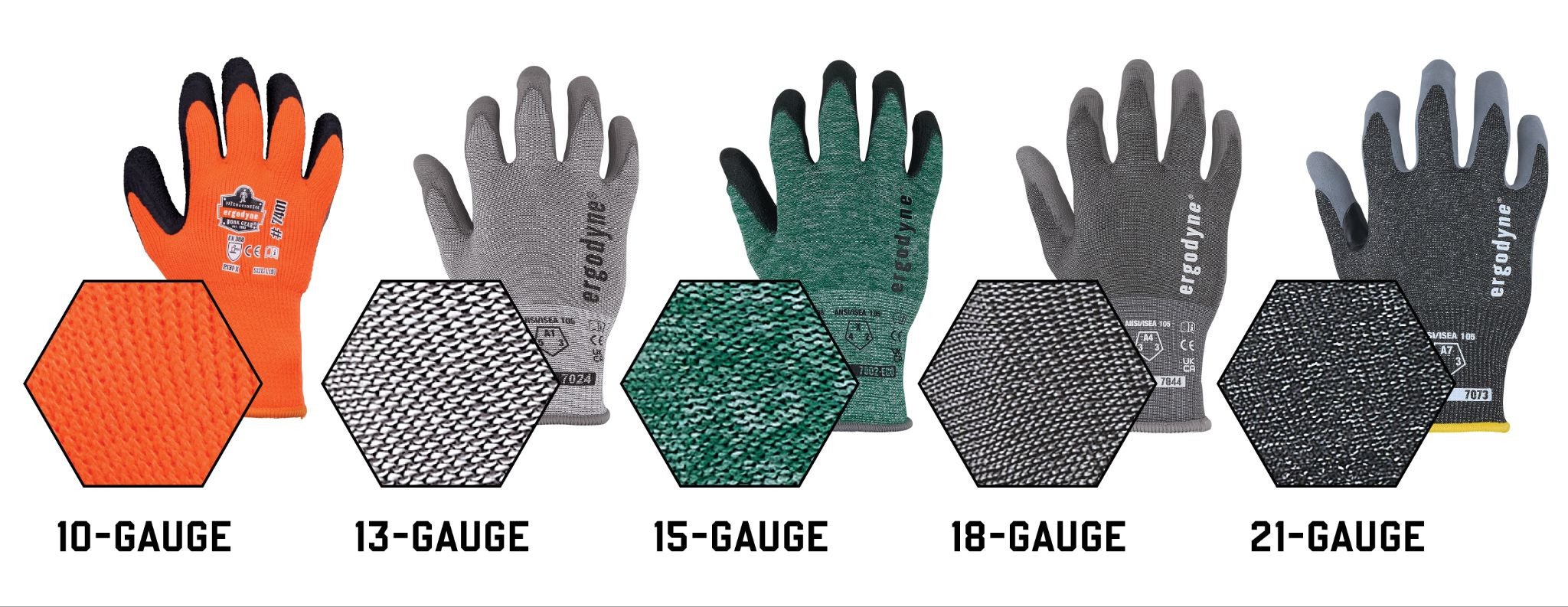
18–21 Gauge Gloves
These gloves are built for precision work and fine motor tasks.
High-gauge gloves are typically very flexible, lightweight and breathable and better for assembly, maintenance and detailed handling work. Overall, they are easier to wear for long shifts with less hand fatigue. For workers constantly handling small parts, tools or touchscreen devices, higher-gauge gloves can make a noticeable difference.
13–15 Gauge Gloves
Combining the benefits of both high and low dexterity gloves, this level of gauge can be the sweet spot for general purpose work.
These gloves offer a balance of dexterity and durability, comfort, strong grip and control and versatility across multiple jobsite tasks. For many industries, 13- and 15-gauge gloves deliver the best combination of comfort, protection and performance.
7–10 Gauge Gloves
Lower-gauge gloves are designed for demanding jobs where durability and protection are prioritized over precision and tactile sensitivity.
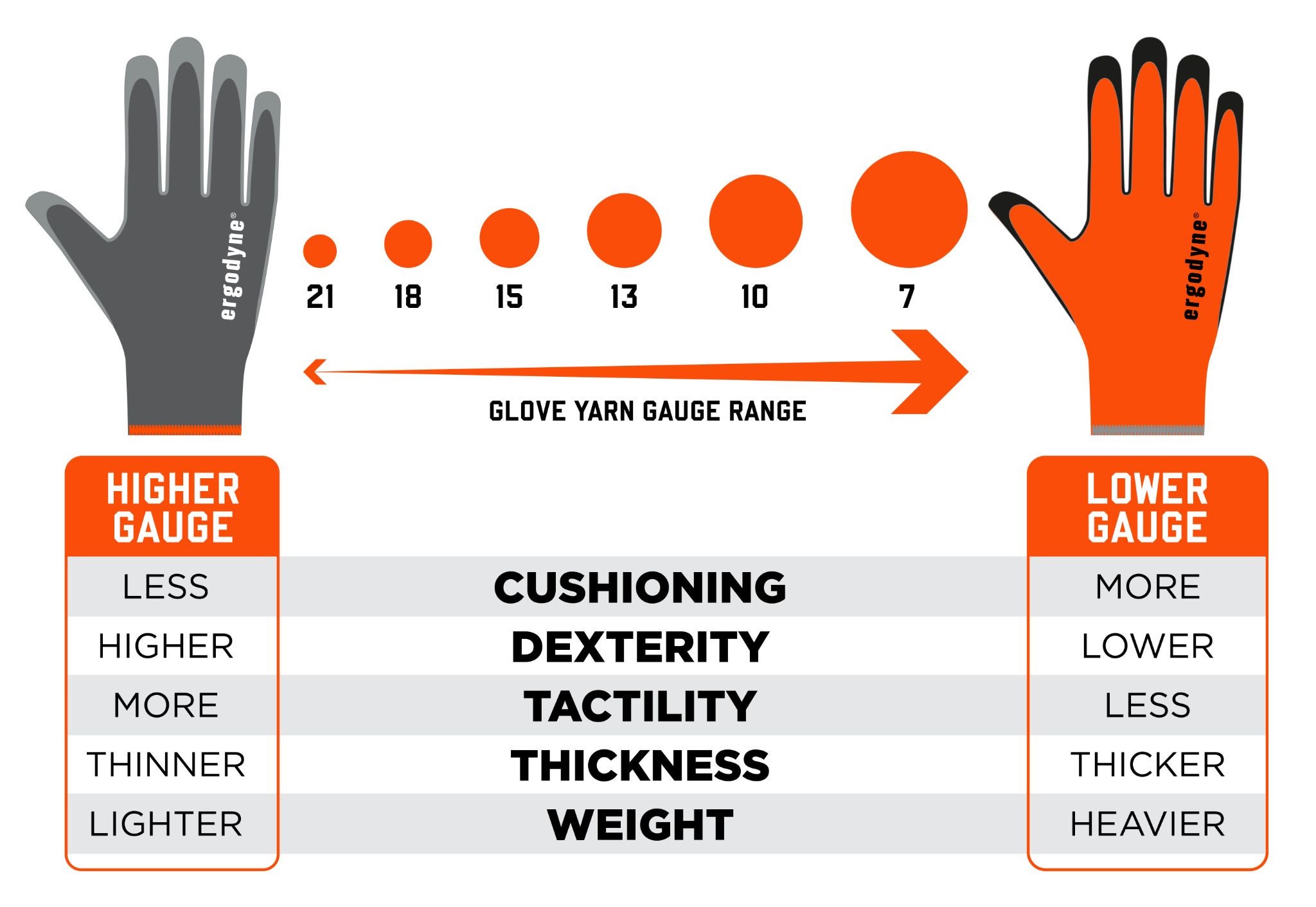
These gloves typically feature thicker liners that provide greater cushioning, enhanced durability and improved resistance to rough materials and abrasive surfaces. The tradeoff is reduced flexibility and less tactile feel, which can make detailed tasks more difficult to perform.
Beyond Gauge: What Really Makes Gloves Durable
As a general rule, lower-gauge gloves tend to last longer in demanding environments because they use thicker yarns and more material. That added bulk can often withstand abrasion, rough surfaces and repeated wear better than a lower-gauge glove.
But gauge isn’t the only factor that affects durability.
Palm coatings, grip materials, reinforcement zones and back-of-hand design all play a role in how long a glove holds up in the field. A high-gauge glove with advanced coatings and engineered fibers may outperform a lower-gauge glove in certain applications.
That’s why it’s important to look at the full glove design when choosing the right glove for the job. Materials, coatings and construction all work together to determine durability, grip and overall performance.
How Glove Yarn Types Impact Gauge and Performance
Gauge isn’t just about how tightly a glove is knitted. It is also shaped by the type of yarn used in the glove construction. Different fibers have different strengths, which is why two gloves of identical gauge may still perform differently on a job.
Lighter, more flexible fibers can be knit at higher gauges to create thin, dexterous gloves without sacrificing strength. More substantial fibers are often used where added durability or cut resistance are needed.
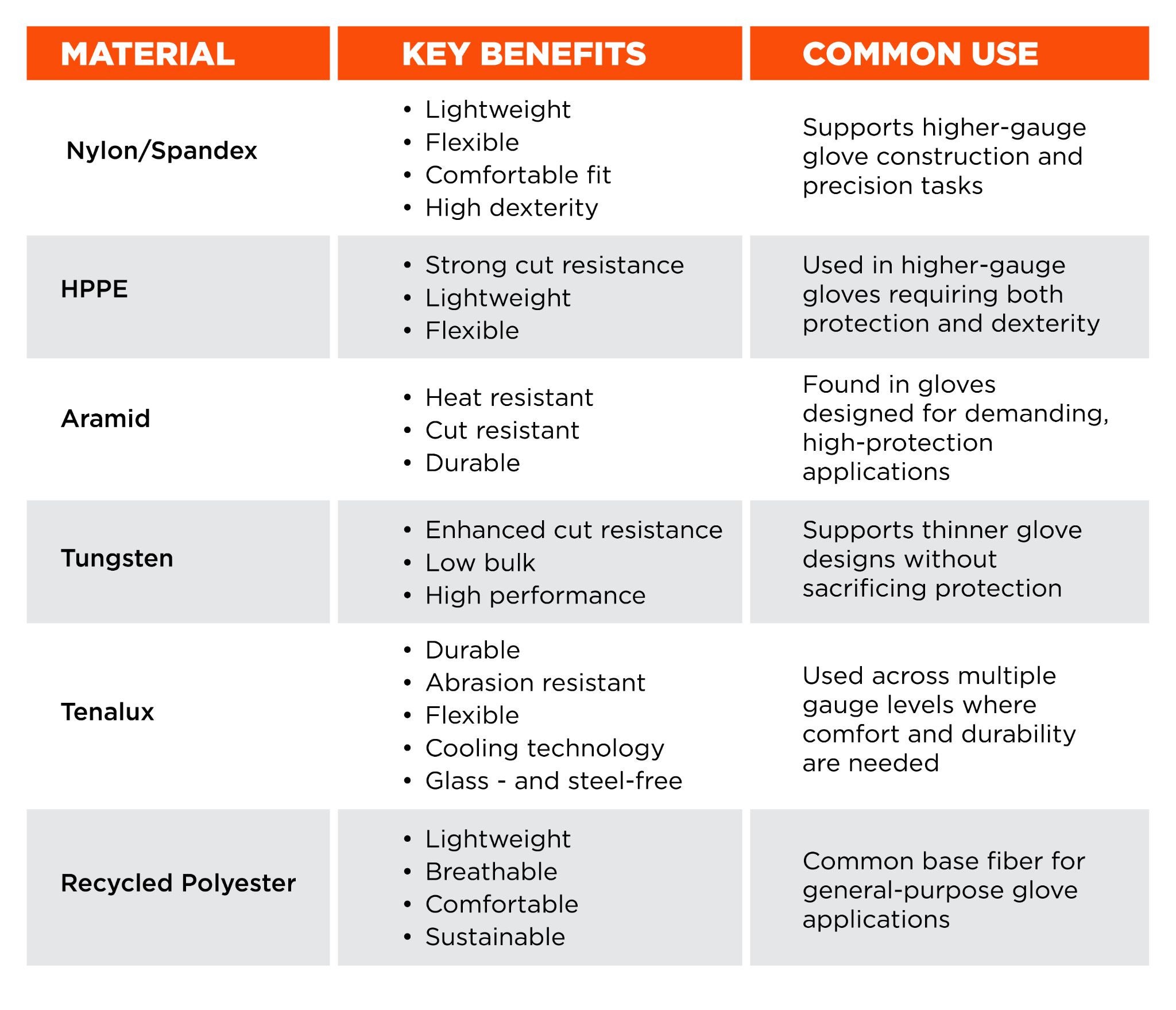
Each of these yarns shows up in glove design a little differently, depending on the balance of protection, comfort and durability needed:
- Nylon/Spandex: Lightweight, flexible and commonly used to improve comfort and fit. Helps gloves achieve higher-gauge construction with good dexterity.
- HPPE: Known for strong cut resistance in a lightweight form. Often used in higher-gauge gloves where protection and flexibility need to work together.
- Aramid: Heat- and cut-resistant fiber used in more demanding applications. Typically found in gloves designed for higher protection needs.
- Tungsten: Engineered fiber used to enhance cut resistance without adding bulk, supporting thinner, high-performance glove designs.
- Tenalux: Designed for durability and abrasion resistance, maintaining flexibility across a range of gauges while offering cooling technology and remaining glass- and steel-free.
- Recycled Polyester: Lightweight base fiber that supports comfort, breathability and sustainability in general-purpose glove designs.
Understanding the yarn being used in different gloves is crucial to understanding gauge. As materials and technology continue to evolve, gloves can be built thinner without giving up the protection workers need.
Choosing the Right Gauge for the Job
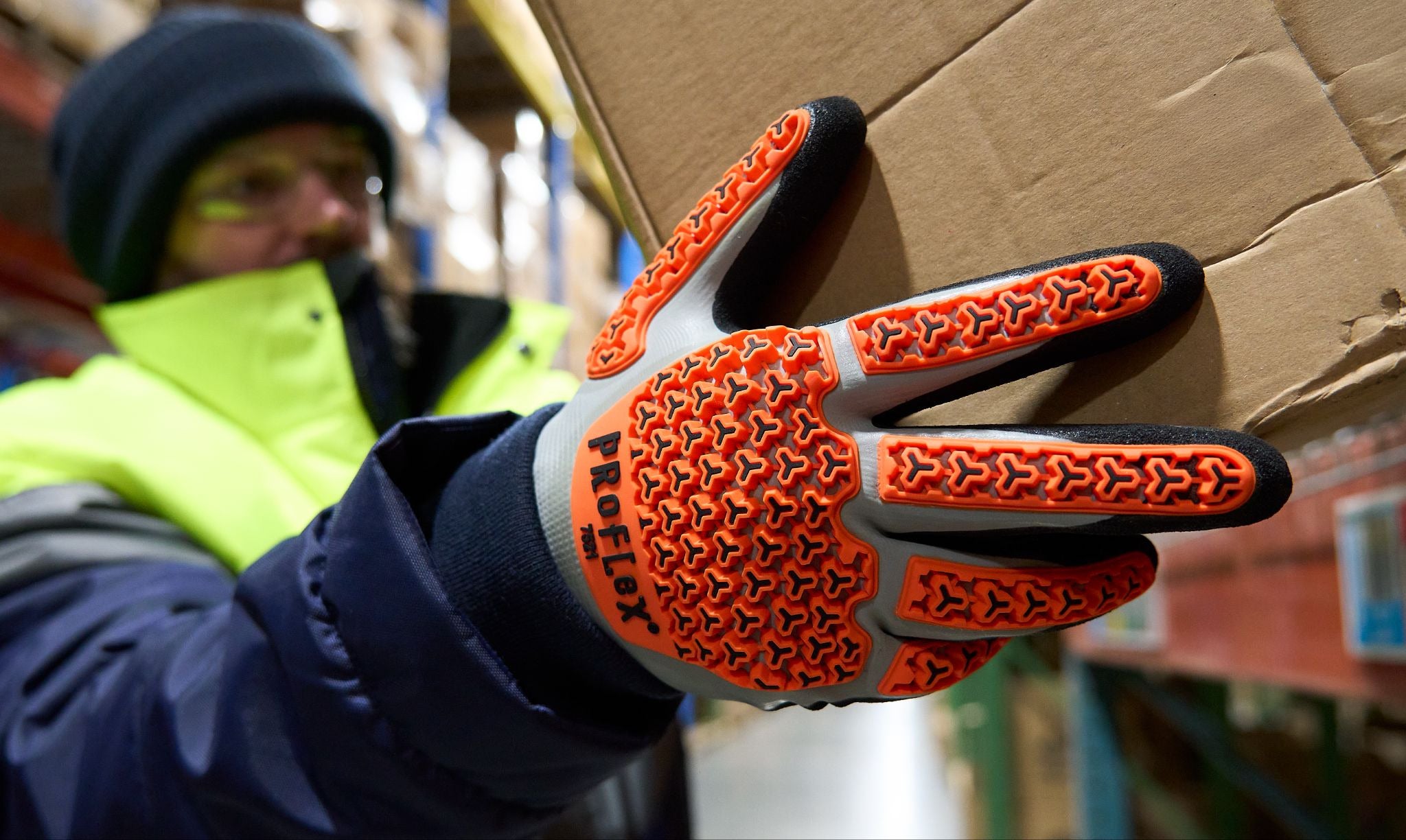
Choosing the right glove starts with understanding the job, the environment and the hazards workers face every day.
If the job demands maximum durability, a lower-gauge glove may be the better fit. If precision, flexibility and all-day comfort matter most, a higher-gauge glove can help workers stay productive without sacrificing control.
While gauge is an important part of glove performance, it’s only one piece of the equation.
Materials, coatings, cut protection and overall construction all play a role in how a glove performs and feels throughout the workday. Taking all of those factors into account can help ensure workers have the right combination of protection, comfort and control for the task at hand.
Learn more about glove gauge and other hand protection technologies here.
FAQ
In the context of seamless knit work gloves, gauge refers to the number of stitches per inch of the machine used to knit the glove. It is a measurement of the knitting density. Standard glove gauges typically range from 7 to 21.
Counterintuitively for some, a higher gauge number means a thinner glove. Because the number represents stitches per inch, a higher number requires a much finer yarn and smaller needles to fit that many stitches into a single inch.
- Low gauge (7-10): Thicker, heavier yarn.
- Medium gauge (13-15): Mid-weight yarn.
- High gauge (18-21): Ultra-fine, lightweight yarn.
A 13-gauge glove is considered a standard mid-weight glove. It provides a solid balance of durability, protection, and a reasonable amount of dexterity, making it a reliable all-rounder for general manufacturing or construction. An 18-gauge glove is ultra-thin and fits like a second skin. It is designed for maximum tactile sensitivity and bare-hand feel, allowing workers to easily pick up tiny screws or operate touchscreens without removing their PPE.
Yes, absolutely. In the past, workers had to choose between high cut protection (which meant thick, bulky gloves) and dexterity. Today, thanks to advanced engineered yarns—which blend materials like HPPE (High-Performance Polyethylene), tungsten, aramid, and steel cores—manufacturers can spin incredibly strong yarns thin enough to be knit on 18-gauge or even 21-gauge machines. You can now find 18-gauge gloves that achieve high ANSI Cut Levels (all the way up to A9).
If your team is handling small parts, wiring, circuit boards, or performing intricate assembly tasks, you should look for 15, 18, or 21-gauge gloves. An 18-gauge glove is generally the sweet spot for combining high-level cut protection with the extreme dexterity required for fine motor tasks.