Tarps and Tacos: How Ergodyne Spread Awareness on Heat Stress Safety
Extreme heat is more than just uncomfortable; it’s deadly. In fact, it’s the leading weather-related killer in the U.S. And with 2024 officially marking the hottest year on record, according to NASA, the danger is only climbing.

Although reducing global temperatures is beyond our immediate control, there are simple and practical things Ergodyne can equip workers with so that they are better prepared for heat-related illnesses should they arise on the job site. Because frankly, they will.
Enter Project H.E.A.T.: Heat Education Awareness Team
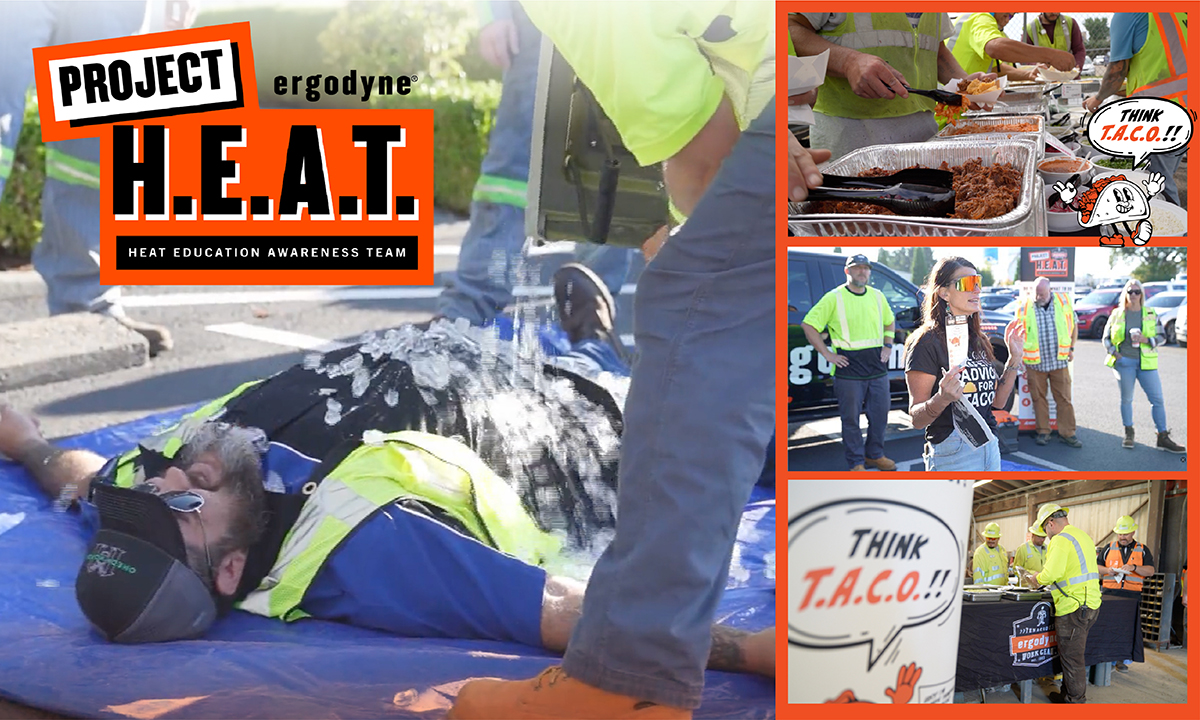
Ergodyne took its safety mission on tour, delivering a unique blend of education and engagement designed to help workers tackle rising temperatures. Through interactive cooling gear demonstrations, heat stress awareness sessions and a taco lunch, the event not only filled the crew's stomachs, but also empowered them to identify symptoms, respond effectively and build safer job sites.
“It’s easy to overlook the dangers of heat stress, but extreme heat can affect everyone, so heat safety is something we all need to prioritize more than many of us realize,” said Lexi Hagler, Product Manager at Ergodyne, in a July 2025 press release announcing the initiative.
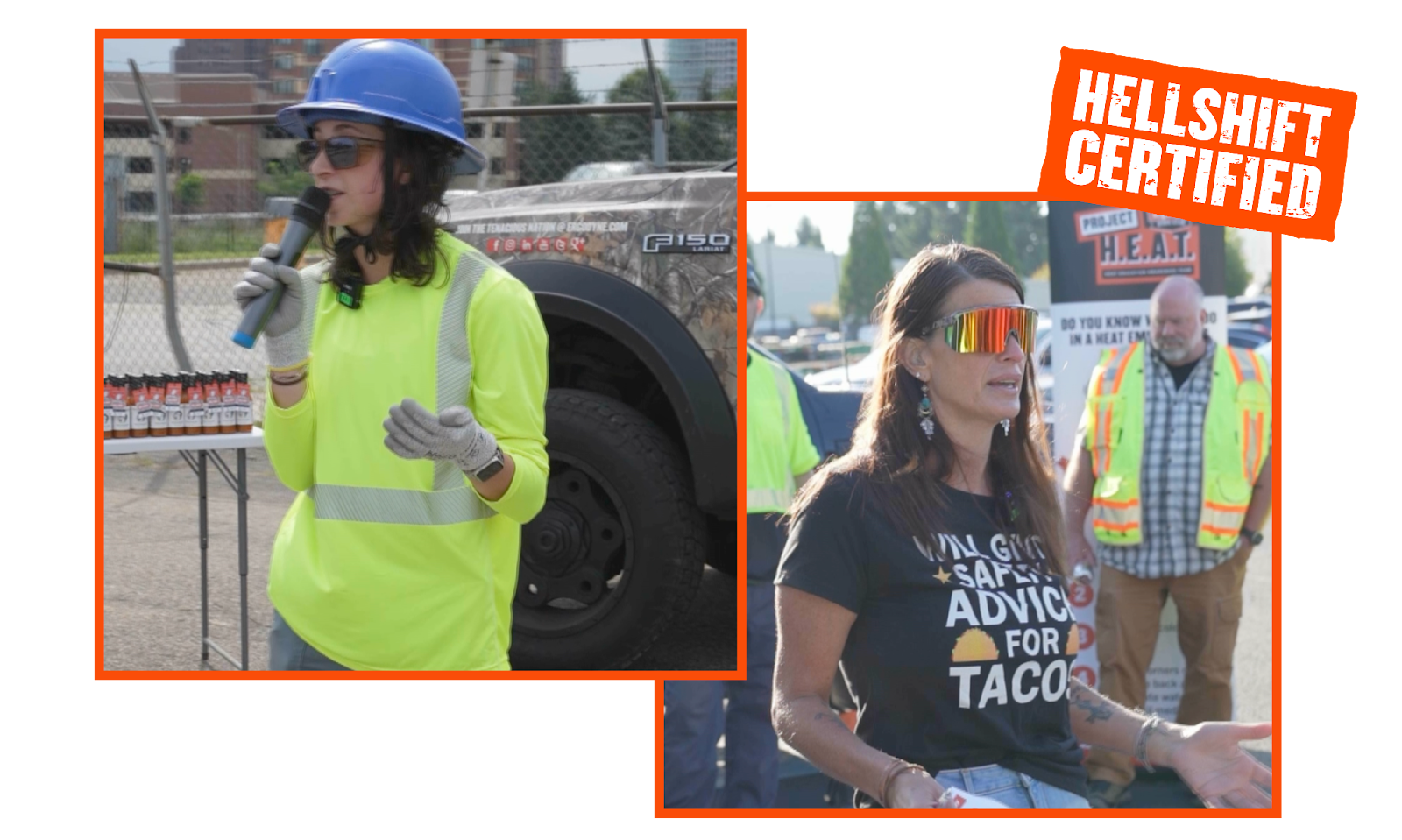
July marks Extreme Heat Month, underscoring the importance of proactive safety measures and making Ergodyne’s initiatives relevant and timely. Beyond Hagler’s work at Ergodyne,she also serves as Vice Chair of the International Safety Equipment Association’s (ISEA) Heat Stress Solutions Group, showcasing her commitment to mitigating this prevalent, and preventable issue.
The T.A.C.O. Method:
When heat stress strikes, it is crucial that everyone present knows what to do and how to help.
Hagler and the Ergodyne team presented a solution.
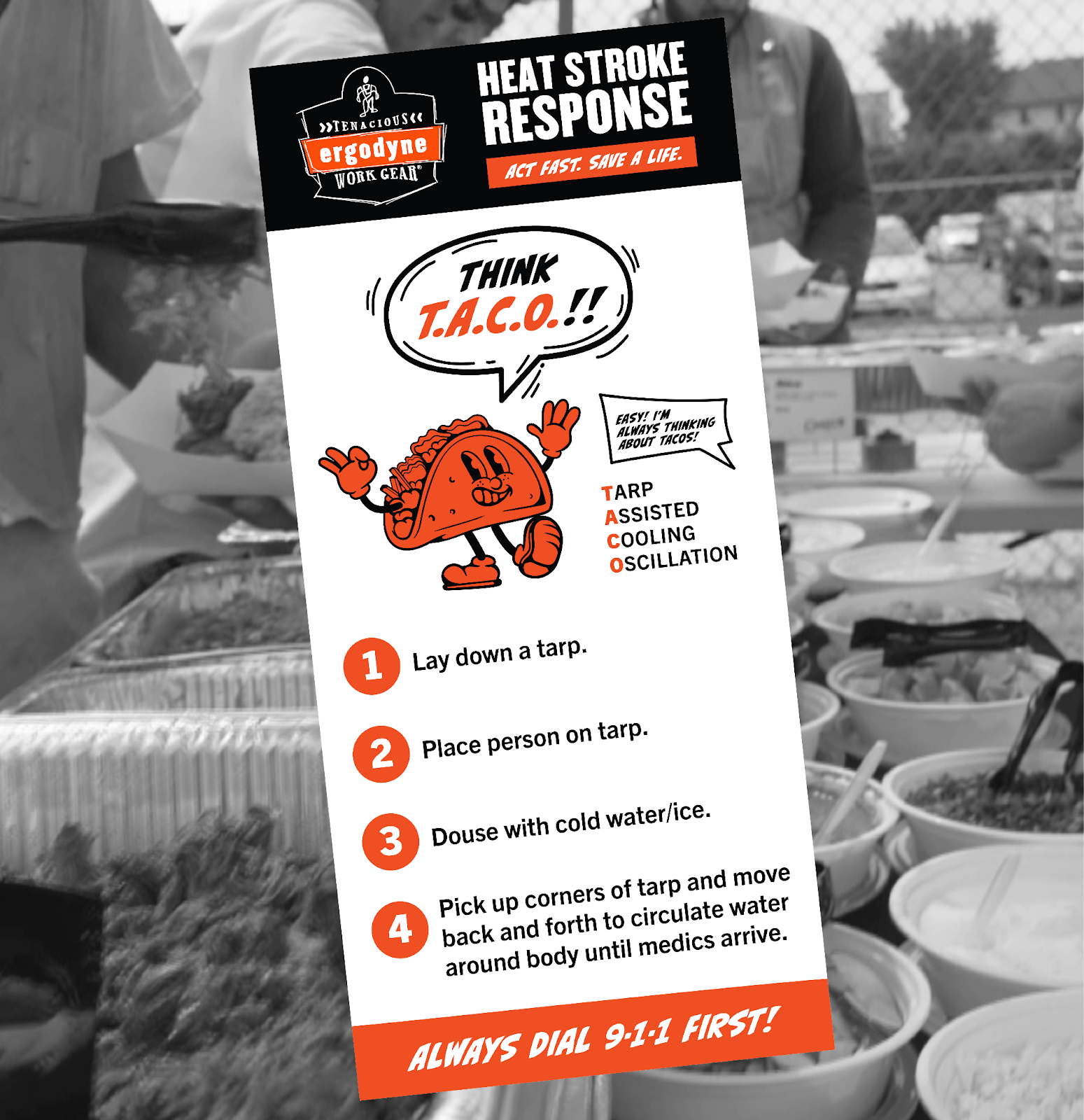
"Tarp Assisted Cooling Oscillation," says Hagler. "Otherwise known as the T.A.C.O. method."
For workers in remote outdoor settings, the T.A.C.O. method is an accessible and life-saving technique that can cool quickly and effectively.
"[It] could be the difference between saving a life and watching someone die in front of you," according to Jim Jones, Safety Director at Omega Morgan, one of the employers who welcomed Ergodyne on site to educate crews on what to do in case of a heat emergency.
Studies show there's a 30-minute window to cool down core temps to avoid permanent cellular damage or death. If access to air conditioning is limited, the T.A.C.O. method is a simple alternative to accomplish that.
"All it takes is a tarp, a cooler of ice and a few co-workers. We're really just simulating an ice bath while we wait for help to arrive," says Hagler. "That last part bears repeating: The first step is calling 911... always."
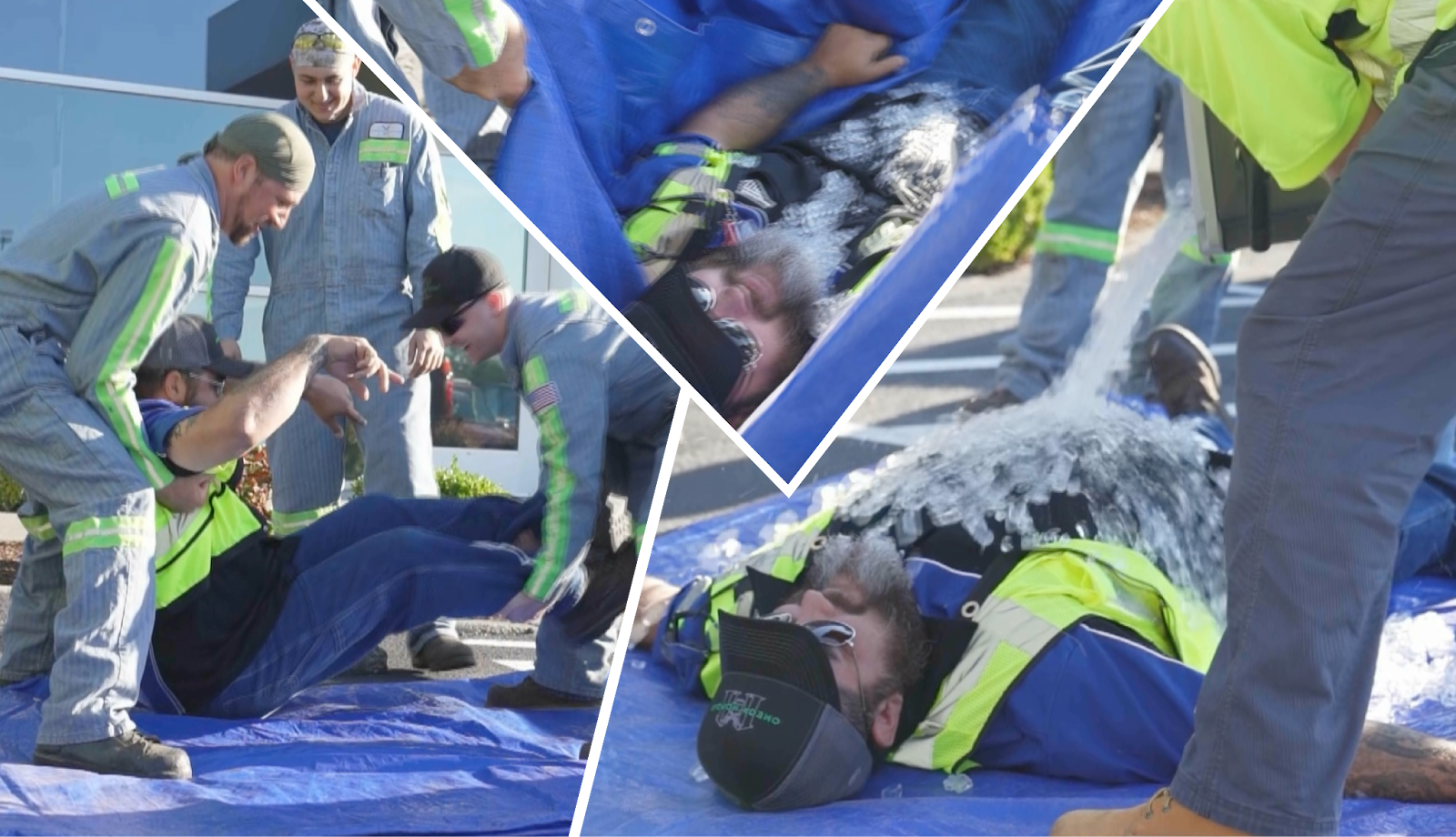
T.A.C.O. Method Steps
- Call 911 immediately as soon as you recognize that someone may be suffering from heat stroke.
- While waiting for emergency responders, spread out a tarp or large plastic sheet on the ground and pour all available ice into the center.
- Carefully position the affected individual in the middle of the tarp, directly on top of the ice.
- Have your team gather around the tarp, grasp the edges and lift the sides up to create a “taco” shape, with the individual safely enclosed inside.
- Gently rock the tarp back and forth to help circulate the ice and maximize cooling contact around the individual’s body.
- Continue rocking and cooling the person until professional medical help arrives and is able to take over.
[WATCH: ERGODYNE BRINGS ALL THE FIXINS TO HEAT STRESS SAFETY STAND DOWNS]
Preventing the Preventable with Ergodyne
While the T.A.C.O method is an effective way to stop and slow down heat stroke, at the end of the day it is better to make sure that heat stroke never occurs in the first place. That being said, water, rest, shade and cooling PPE are the best ways to ensure that the tarp never has to come out and heat-related illnesses become less of a worry on job sites nationwide.
"... Our mission here at Ergodyne and with Project H.E.A.T. is to prevent emergency action from being needed in the first place," says Hagler. "And with the proper approach—meaning frequent rest breaks in the shade, constant hydration and cooling PPE—it can be."
During an appearance on the Get Healthy Tampa Bay Podcast, Hagler emphasized the importance of easing into work and allowing the body time to adjust to high temperatures, something especially crucial for new employees or those returning after time away.

"Acclimatization is a big thing we talk about," said Hagler. Most of the recorded injuries and fatalities happen within the first two weeks of work, Hagler shared.
Another important prevention measure is ensuring each crew is educated on the signs of heat stress.
"One of the ways I talk to my crews about noticing the signs of heat stress is [...] talking with your partner consistently throughout the day," said Jones. "And if you notice that their attitude is changing, they're slurring their words, they're becoming confused or they're having a difficult time doing easy tasks [...] something's probably getting ready to be wrong."
Paying attention to your surroundings helps workers act quickly and stop heat stress before it gets worse. Whether you notice a co-worker looking tired, acting differently or becoming unusually quiet, these are signs they may be in trouble. By recognizing these changes early, you can step in, help them cool down and prevent serious harm.
Conclusion
Project H.E.A.T. is more than a one-time event. It's part of Ergodyne’s ongoing commitment to promote workplace safety and awareness around rising temperatures.
Ergodyne’s goal wasn’t just to talk about safety. It was to create an experience workers would remember long after their lunch breaks were over. The response was overwhelmingly positive. Crews shared stories, asked questions and left with a better understanding of how to spot the early signs of heat stress and how to protect themselves and their teammates.
Learn more about heat stress, the signs and the solutions here. Because at the end of the day; the best way to fight heat stress? Stop it before it starts.