Jobsite Hydration: Why Water Access Is a Safety Control, Not a Perk
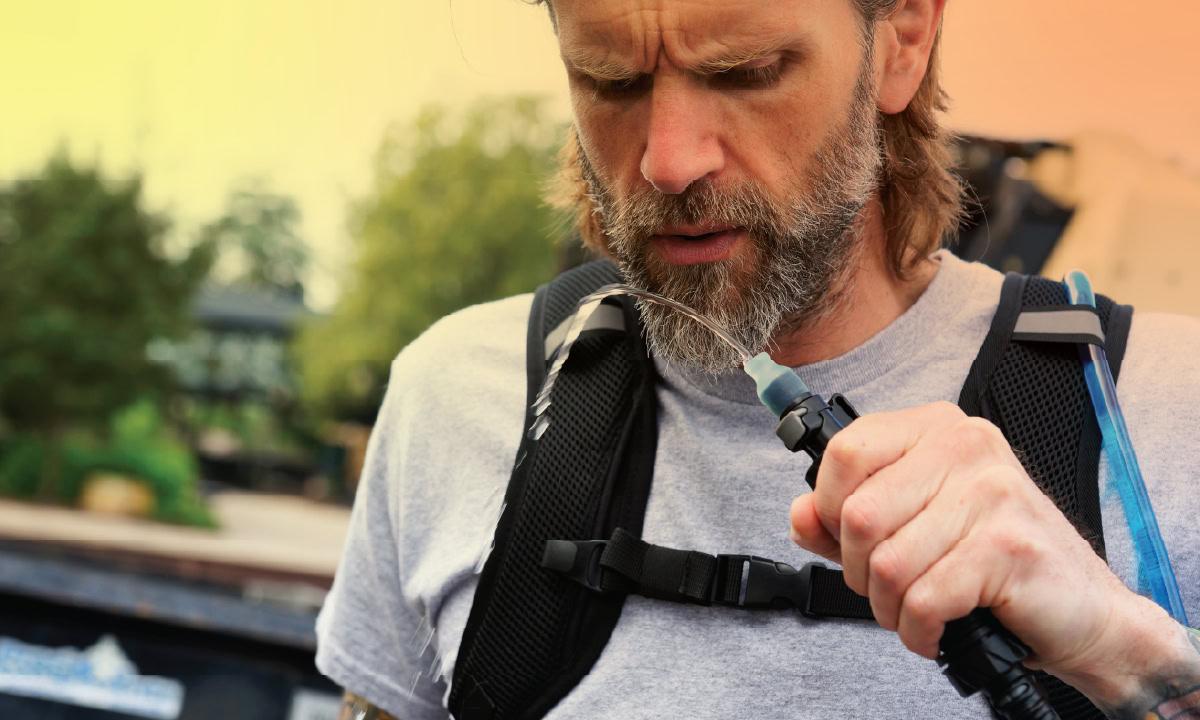
Dehydration rarely becomes a problem all at once. It often starts before the workday begins with fluid loss from the night before, then builds through a missed water break, an ignored headache or fatigue that feels like a normal part of a demanding shift.
As fluid is lost through sweating, the signs and symptoms of dehydration become more noticeable. Reaction times slow, concentrating becomes more difficult and routine tasks require more effort. Muscle fatigue can set in sooner, making physical work harder and increasing the risk of mistakes.
Many workers don't realize they're dehydrated until they begin to feel thirsty. By then, though, the effects of dehydration may have already begun.
For that reason, hydration should be treated as a proactive habit rather than a response to thirst. It plays a direct role in worker safety, decision-making and productivity throughout the day. Whether crews are working in high temperatures, wearing heavy PPE or performing physically demanding tasks, staying hydrated helps them perform at their best.
Why Does Hydration Matter on a Jobsite?
Construction sites, warehouses, road crews, utility work and other physically demanding environments place constant stress on the body. Workers who are lifting materials, operating equipment, wearing protective gear or working in direct sunlight need to prioritize hydration to help them stay productive and safe throughout their shift.
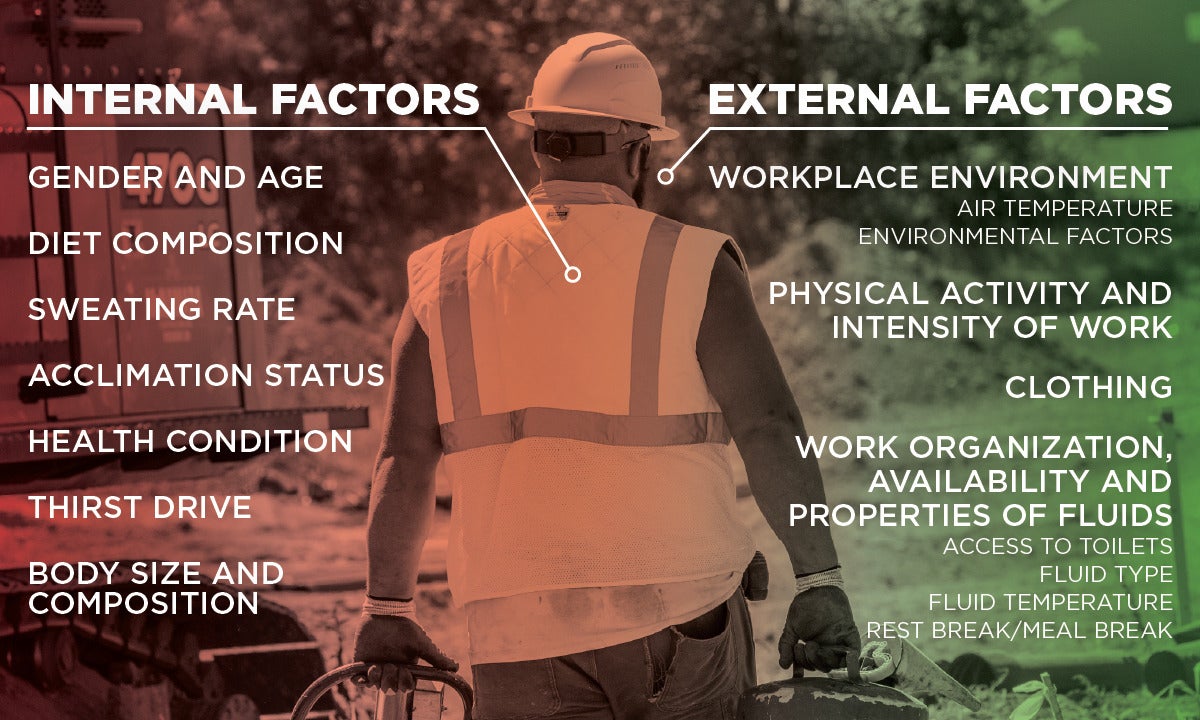
The body relies on fluids to regulate its temperature through sweating. As workers lose water and electrolytes while sweating, those resources need to be replaced. If they aren't, the effects of dehydration can become noticeable over the course of a shift.
Workers may tire more quickly, struggle to maintain the same level of focus or find that physically demanding tasks require more effort than usual. In hot conditions, those challenges become even greater as the body works harder to stay cool.
Hydration also plays an important role in heat stress prevention. When fluid loss outpaces fluid intake, the risk of heat-related illness increases, especially during long shifts, high temperatures or periods of sustained physical activity.
Hydration is one of the most basic and effective ways to support safety, performance and overall jobsite readiness.
What Common Signs of Dehydration Should Crews Watch For?
Dehydration rarely happens all at once. Symptoms typically become more noticeable as fluid loss increases, which is why recognizing the early warning signs and course correcting as soon as possible is so important.
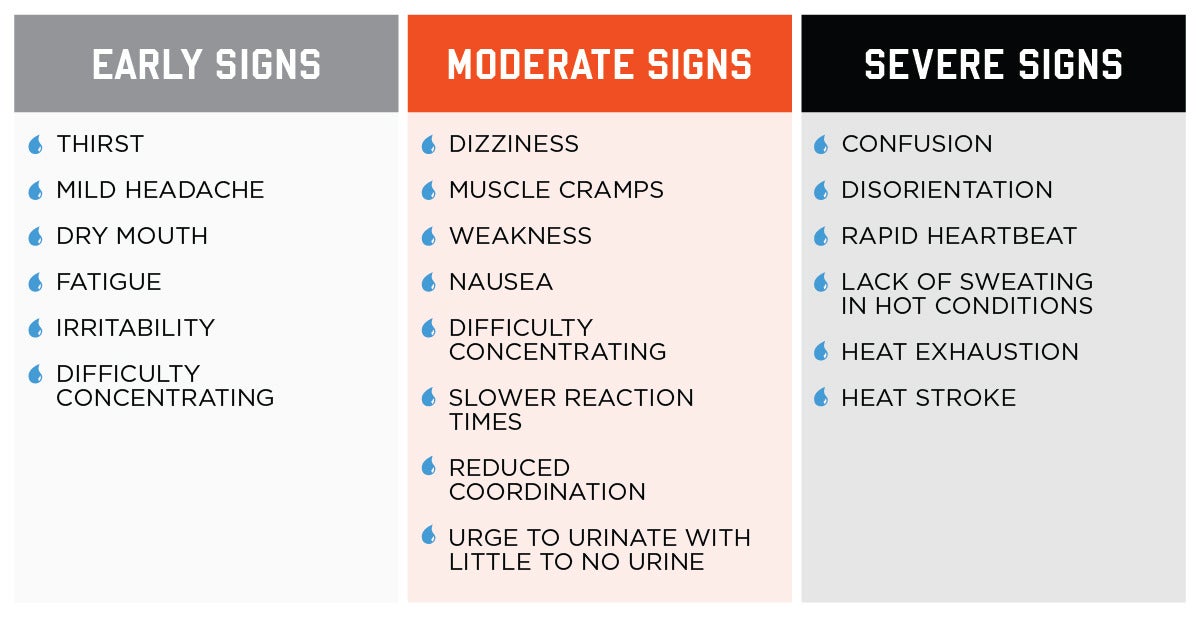
Early Signs
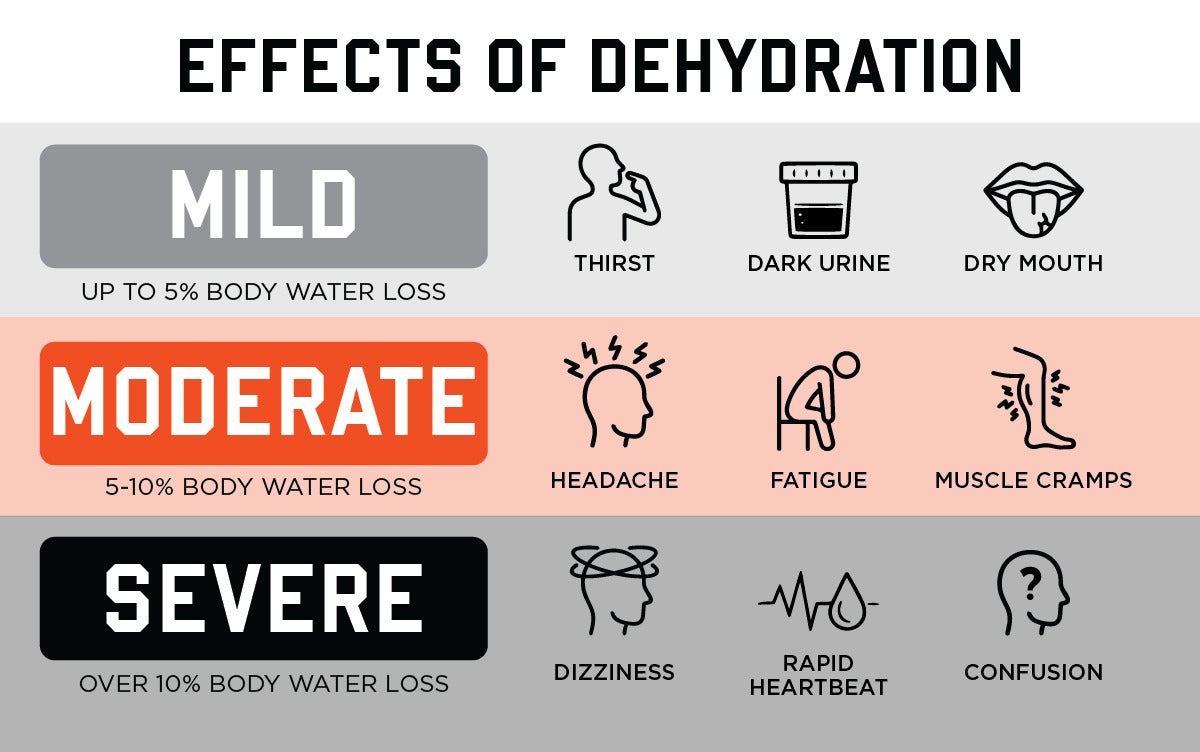
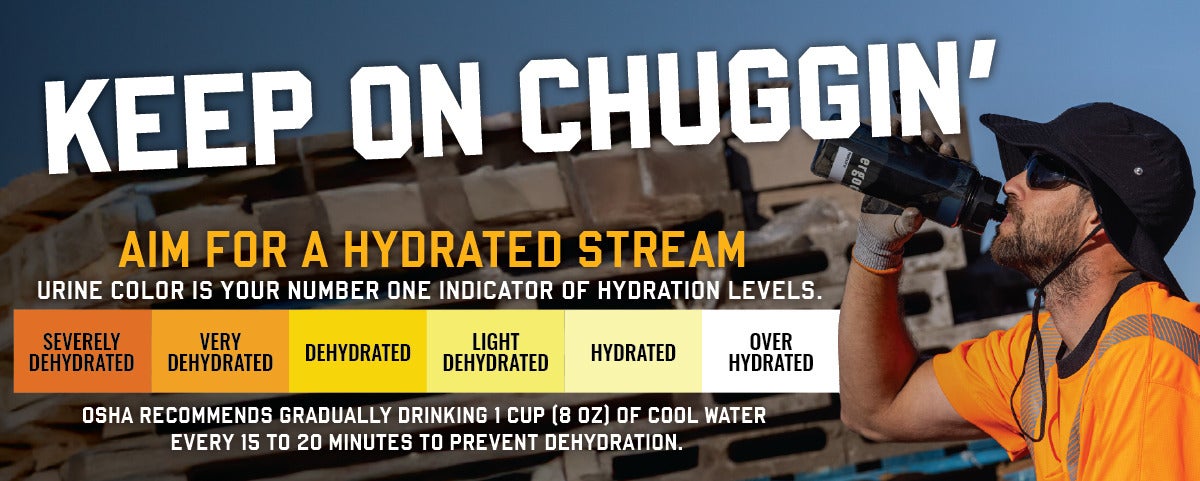
The first signs of dehydration often seem normal and are easy to dismiss during a busy shift. A worker may feel thirsty, develop a mild headache or notice a dry mouth. Fatigue can begin to set in earlier than expected, and irritability or difficulty concentrating may become more noticeable. Urine may also appear darker than normal, signaling the body needs more fluids.
Moderate Signs
As dehydration progresses, the effects can start interfering with physical and mental performance. Workers may experience dizziness, muscle cramps, weakness or nausea. Concentration can become more difficult, reaction times may slow and coordination may not feel as sharp as usual. In active work environments, these symptoms can increase the risk of mistakes and injuries.
Severe Signs
Severe dehydration is a medical concern that requires immediate attention. Workers may become confused or disoriented, develop a rapid heartbeat or stop sweating despite working in hot conditions. In more serious cases, dehydration can contribute to heat exhaustion or heat stroke, which can quickly become life-threatening if not treated promptly.
Recognizing the early signs of dehydration can help prevent more serious health and safety risks on the job. Workers should pay attention to symptoms in themselves and those around them, as a coworker may notice warning signs before someone recognizes them on their own. If dehydration symptoms begin to appear, take a break, move to a cooler area and rehydrate before the situation becomes more serious.
Why is Dehydration Dangerous on Job Sites?
The effects of dehydration extend far beyond feeling thirsty and experiencing physical discomfort. As discussed above, when fluid loss increases, workers will likely experience reduced focus, slower reaction times and increased fatigue, all of which can affect how safely and efficiently they perform their jobs.
Many workers start their day with coffee or an energy drink to help fuel their shift. While these drinks can be part of a normal routine, they should not replace water, especially during hot or physically demanding work. A simple habit like drinking water alongside your caffeine can help you stay ahead of dehydration throughout the day.
On busy jobsites, even small declines in alertness can have consequences. Workers may be more likely to miss hazards, overlook routine safety checks or make errors during tasks that normally require little thought. In environments where equipment, vehicles, heights or active work zones are involved, those mistakes can create serious risks.
Dehydration can also affect physical performance. Muscle cramps, weakness and fatigue can make lifting, carrying and repetitive tasks more difficult, while increasing the likelihood of strain or injury.
One of the biggest challenges is that these effects often develop gradually, without a worker realizing it. By the time a worker feels noticeably dehydrated, their performance and decision-making may already be affected, making prevention and early intervention critical on the jobsite.
This is what makes dehydration a uniquely serious threat on the jobsite. It affects both the body and the ability to recognize danger. While the physical risks are serious, including heat exhaustion, heat stroke and fainting, the added, and often greater concern, is how quickly awareness and decision-making can decline.
When that happens, workers are less likely to notice hazards in real time or respond as quickly as they normally would. On a jobsite, that can mean missing a fall hazard, mishandling tools or failing to react to moving equipment or other nearby activity.
It is this combination of physical and cognitive risk that makes dehydration a hazard that cannot be ignored.
Why are Hydration Systems Difficult to Implement on Jobsites?
Most crews know hydration is important. The real challenge is that the jobsite itself often makes consistent hydration difficult to maintain.
In theory, the solution is simple: drink water regularly throughout the day. In practice, access and timing get in the way.
Water is not always close to where the work is happening. Even short delays or long walks to a cooler or truck can be enough to push hydration off until later in the shift, and later often turns into not at all.
Workflow also plays a role. When tasks are active and momentum is high, stepping away for water can feel like a disruption. If it requires climbing down, crossing the site or pausing a task mid-progress, it is easy for it to be delayed or skipped.
Small barriers add up quickly. Water bottles may be left in trucks instead of kept near the worker. Certain types of PPE can make accessing water less convenient. Workers may rely on scheduled breaks instead of drinking steadily. In some cases, shared coolers or water stations may not always be close, clean or readily accessible when needed.
Over time, hydration becomes reactive instead of continuous.
When access is inconvenient, hydration is seen as "optional". When seen as "optional" hydration is less likely to be prioritized against the other demands of a busy jobsite.
What are the Solutions?
Improving hydration on the jobsite is not about reminding crews to drink more water. It is about making hydration easier to maintain throughout the workday and by removing the barriers that get in the way.
The most effective approaches focus on three areas: access, routine and environment.
Access
If water is not close to the work, it is less likely to be used consistently. That is why effective hydration setups bring water closer to the worker rather than requiring workers to go to it.
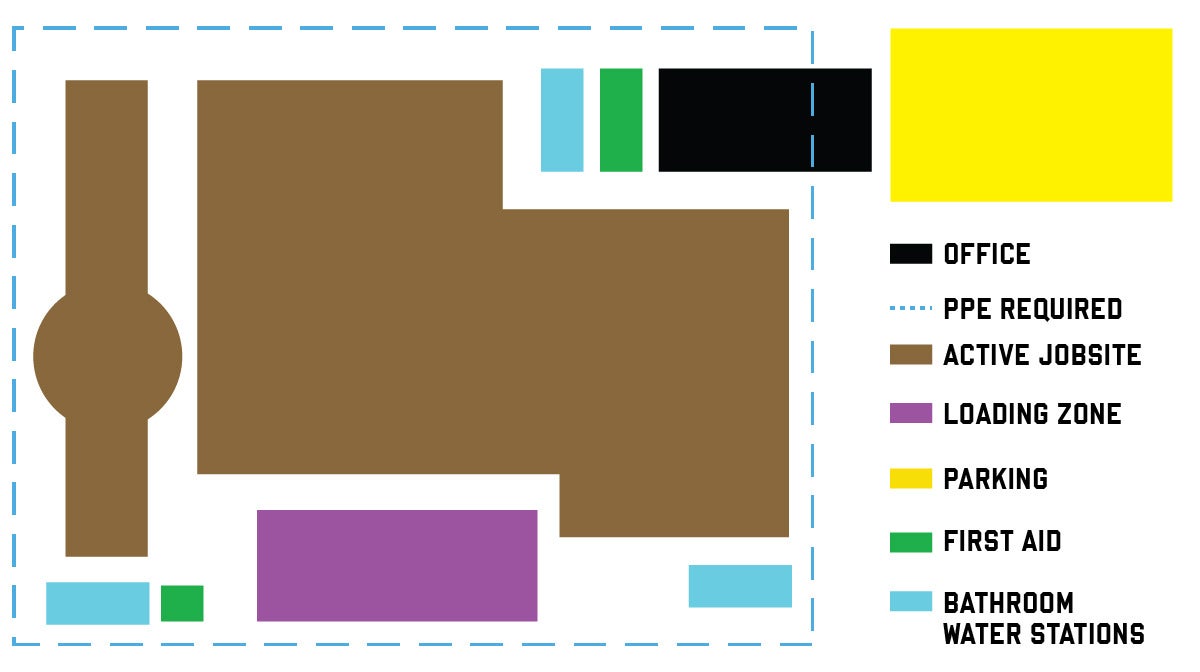
This can include hydration packs that move with the crew, personal bottles that can be worn or carried for quick access and hydration stations positioned near active work areas. In larger or changing jobsites, mobile hydration setups can help ensure water is available wherever the work is happening.
The goal is to eliminate unnecessary steps between a worker and hydration.
Routine
Access alone is not always enough. Hydration works best when it is built into daily routines rather than left to individual choice under pressure.
This can include encouraging regular sips throughout the day, reinforcing hydration before shifts begin and using simple peer accountability so crew members look out for one another. In some environments, basic tools like hydration reminders can help reinforce consistency.
The goal is to make hydration part of the rhythm of the work, not something that is only addressed when someone feels thirsty. Staying hydrated after the shift matters too, helping workers replace lost fluids and start the next day ready to perform.
Environment
The conditions on site also influence how much strain workers are under and how quickly they lose fluids.
Shade structures, designated rest areas and scheduled breaks during peak heat can help reduce stress on the body. In some cases, cooling PPE, temporary shelters, hydration packs and misting systems can also support heat management during high-temperature work.
This Water. Rest. Shade. three-part approach stresses that no single solution is enough on its own. Instead, it is about combining the environment, engineering and administrative controls, workplace practices and routines, as well as individual habits, to prevent dehydration on the job.
Building a Hydration System
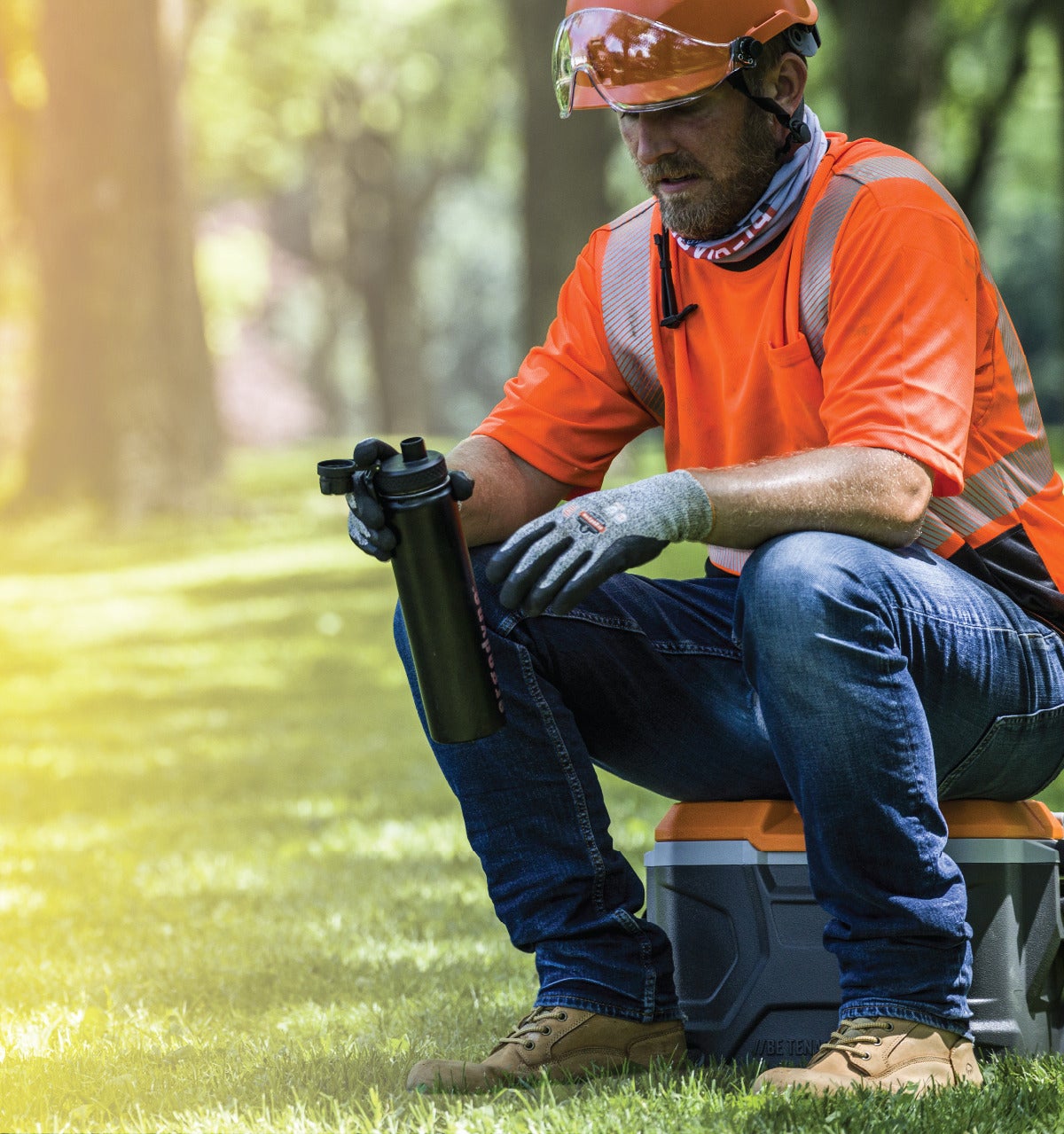
Above: Ergodyne Chill-Its 5152 Insulated Stainless Steel Water Bottle, Chill-Its 5170 Industrial Hard Sided Cooler and GloWear 8020BK Hi-Vis T-Shirt help workers stay hydrated and protected while working in high-heat environments.
Hydration works best when it is integrated into the flow of the job and crew’s lives in general, whether that means having water on the body, available at the point of work or built into the rhythm of the shift. When access depends on walking across site or waiting for scheduled breaks, consistency drops.
That is where the right tools and systems make a difference.
Tools like personal hydration packs, insulated reusable water bottles, spray and pump cooling systems, cooling towels and vests and portable jobsite shelters all help reduce the risk of heat stress on the jobsite. By making hydration and heat relief more accessible, these solutions support safer working conditions and help lower the likelihood of heat-related illness, fatigue-related mistakes and reduced performance in high-heat environments.
Ultimately, hydration is not just about reminding crews to drink water. It is about making sure water is always within reach of the work itself.
Shop Ergodyne’s full line of hydration solutions here.