
The 5-Gallon Bucket Punches Way Above Its Weight
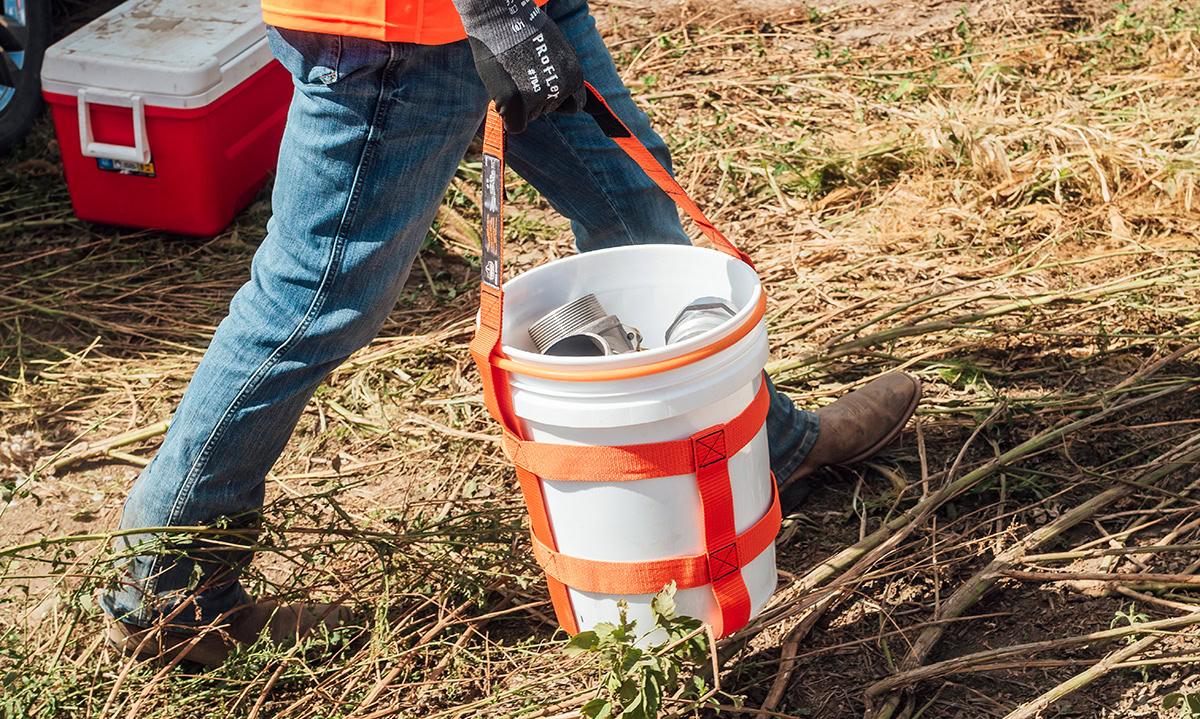
The 5-gallon bucket is a multipurpose worksite workhorse used to haul almost anything that fits neatly (or not so neatly) inside. Water, concrete, tools, gravel, scraps, mortar—you name it. If it needs to get from point A to point B, there’s a good chance a 5-gallon bucket is on the job.
Empty, a 5-gallon bucket weighs next to nothing. Depending on what you put inside, that same bucket can become a real heavy lift, real fast. Given a relatively low capacity as compared to wheelbarrows and other hauling methods, multiple trips are often necessary when using a bucket. That means the inherent stress and strain of carrying bucketload after bucketload—often over rugged terrain and across large jobsites—can add up fast. What felt manageable on the first trip can become nearly unbearable by the fifth or sixth.
How Much Does a 5-Gallon Bucket Hold?
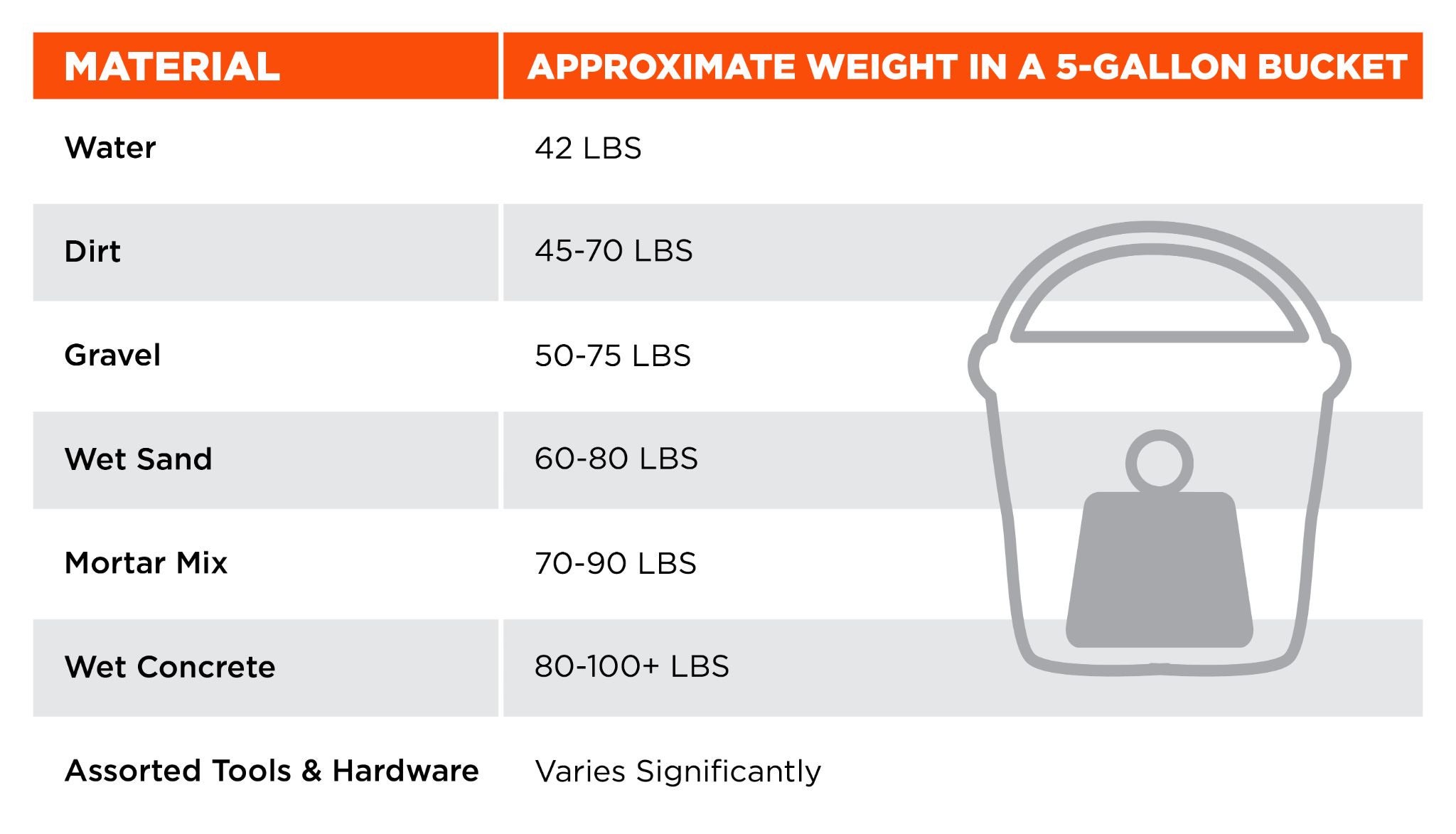
The easy answer is 5 gallons. But that’s just volume. It may seem obvious (because it is) but weight can vary wildly. For example, 5 gallons of water weighs in at 42 lbs. That same volume of wet concrete can be more than twice that.
To give you a clearer picture of the extremes workers face, here are some of the most commonly carried materials and their relative 5-gallon weights.
Getting a Handle on a Common Problem
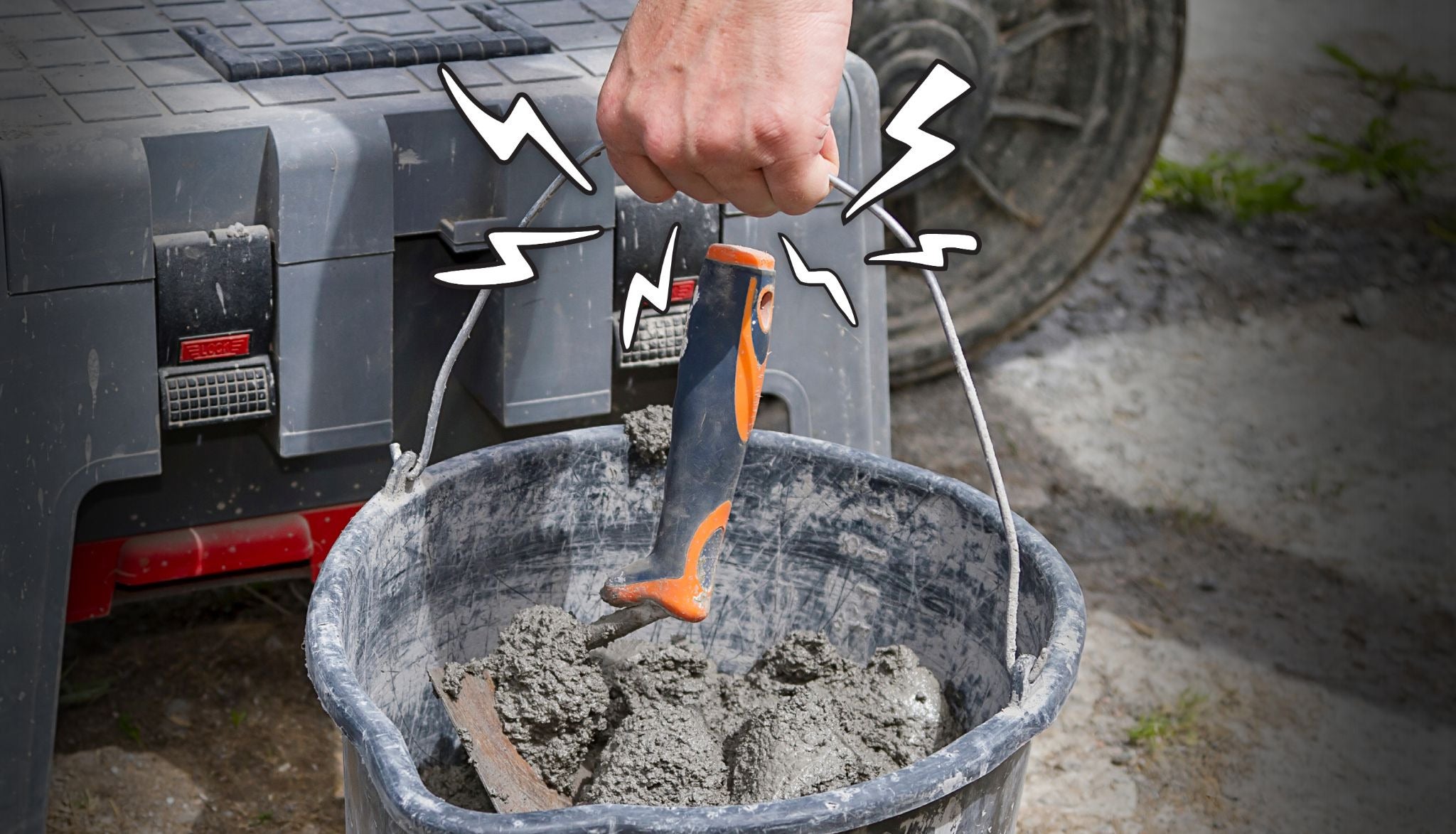
When someone carries a bucket by the handle, the entire weight hangs below and away from their natural center of gravity. This forces the arm, shoulder, back and legs to work harder to maintain balance, especially as contents shift and slosh over uneven terrain.
Then there’s the 5-gallon elephant in the room—that wire handle. The plastic “comfort grip” can wear or break over time, leaving you with the bare wire that can become a slicing hazard. The risk only increases with heavier loads, longer trips and frequent use.
Worksite Workarounds
Considering the plastic 5-gallon bucket has been around since the 1960s, you’d think someone would’ve come up with a better solution to that thin, uncomfortable wire handle and the unbalanced load problem.
Well, leave it to the workers to be the first to find a better way.
Here’s an example of the makeshift solutions people use to make 5-gallon buckets a little more manageable and a lot less miserable.
- Carry the bucket with two hands
- Switch hands every few minutes
- Use makeshift straps and slings
- Take more trips with lighter loads
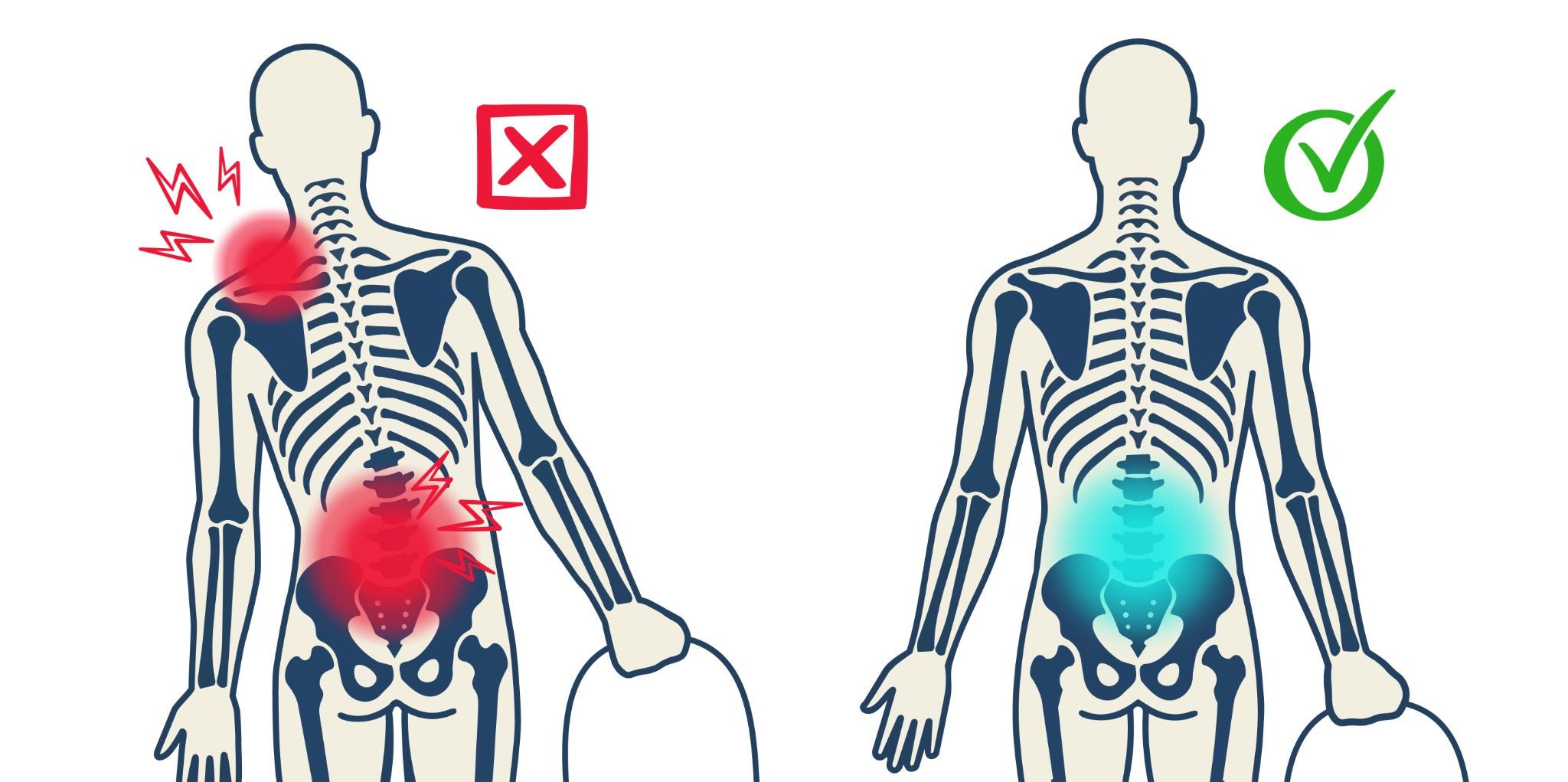
To be fair, there are commercially available solutions that address this all-too-familiar pain. Systems now exist to help workers improve balance, reduce strain, prioritize comfort and make repetitive carrying more manageable.
While these solutions have been quite helpful, they still leave room for improvement—and that’s where Ergodyne comes in.
The Ergodyne Solution: An Improvement on the Improvements
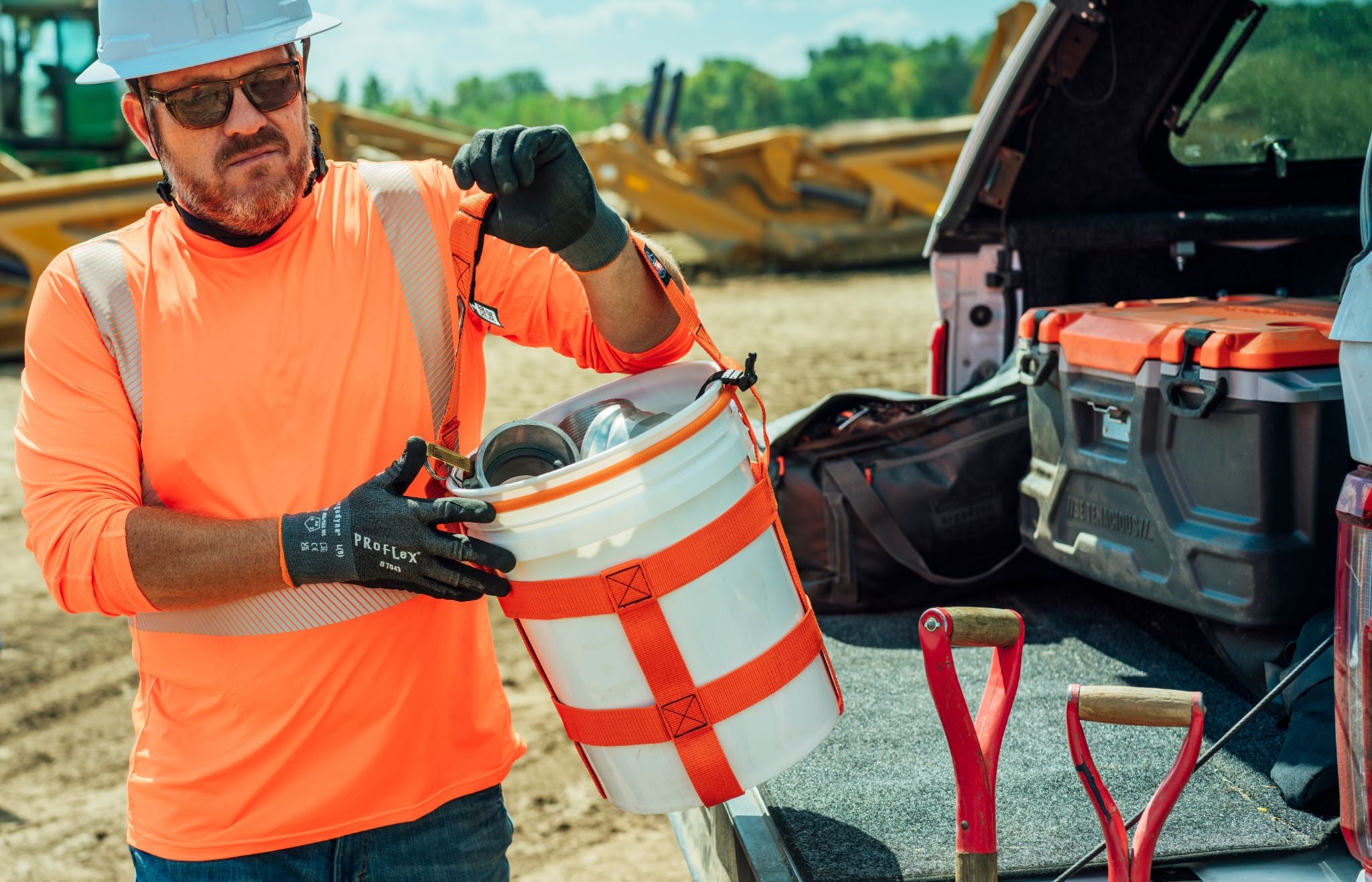
Introducing the Ergodyne Arsenal 5890 5-Gallon Bucket Carrier, a purpose-built solution to the 5-gallon bucket problem. Constructed with heavy-duty, abrasion-resistant webbing, the Arsenal 5890 is made to pull its own weight across even the most demanding jobsites. However, the carrier does not increase the bucket’s weight capacity. Workers should always follow the bucket manufacturer’s weight rating when loading and transporting materials, whether using a carrier or not.
The padded handle is a serious upgrade designed to reduce strain and increase carrying comfort. A universal cinch system securely grips the bucket rim, helping keep the carrier attached even when set down.
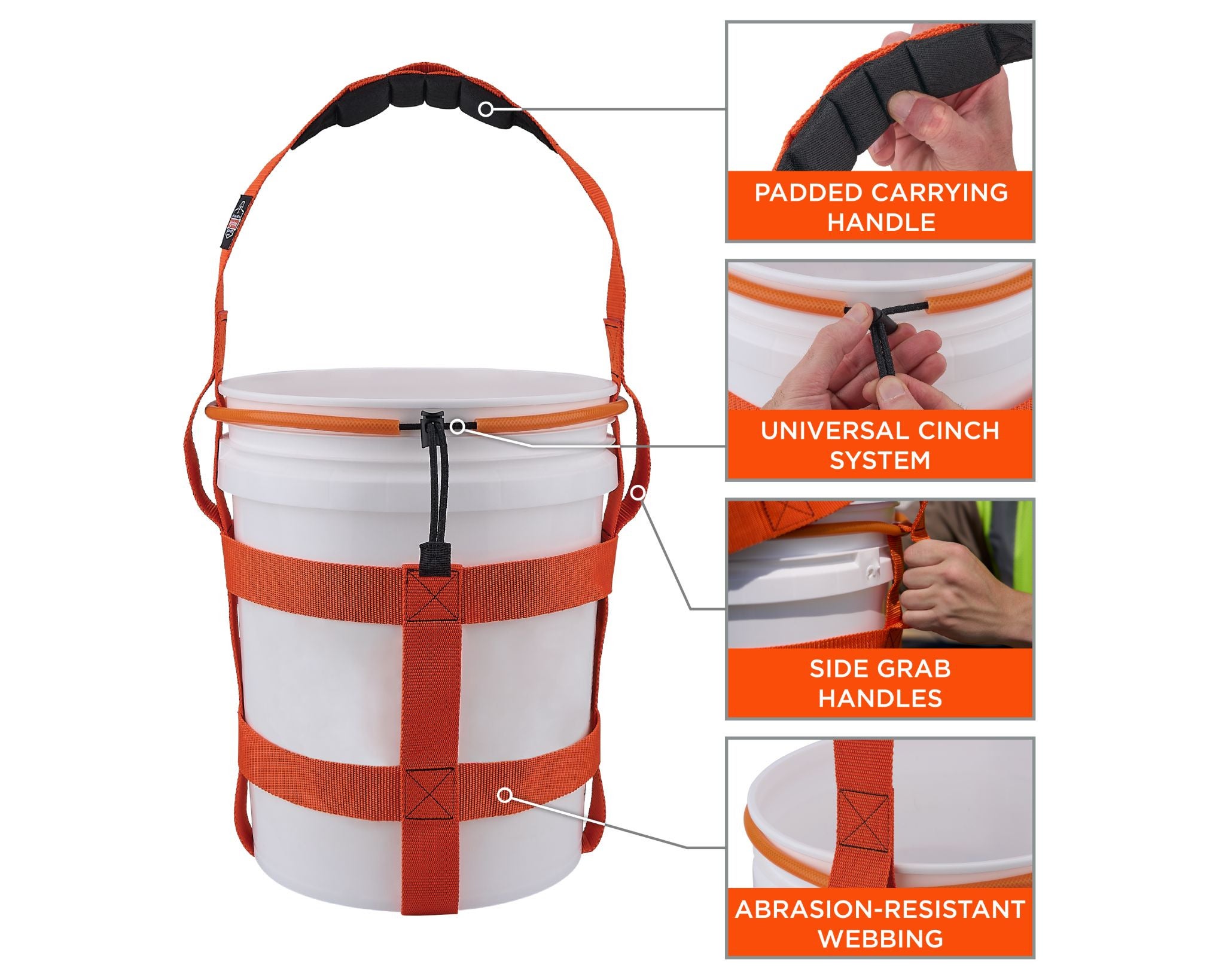
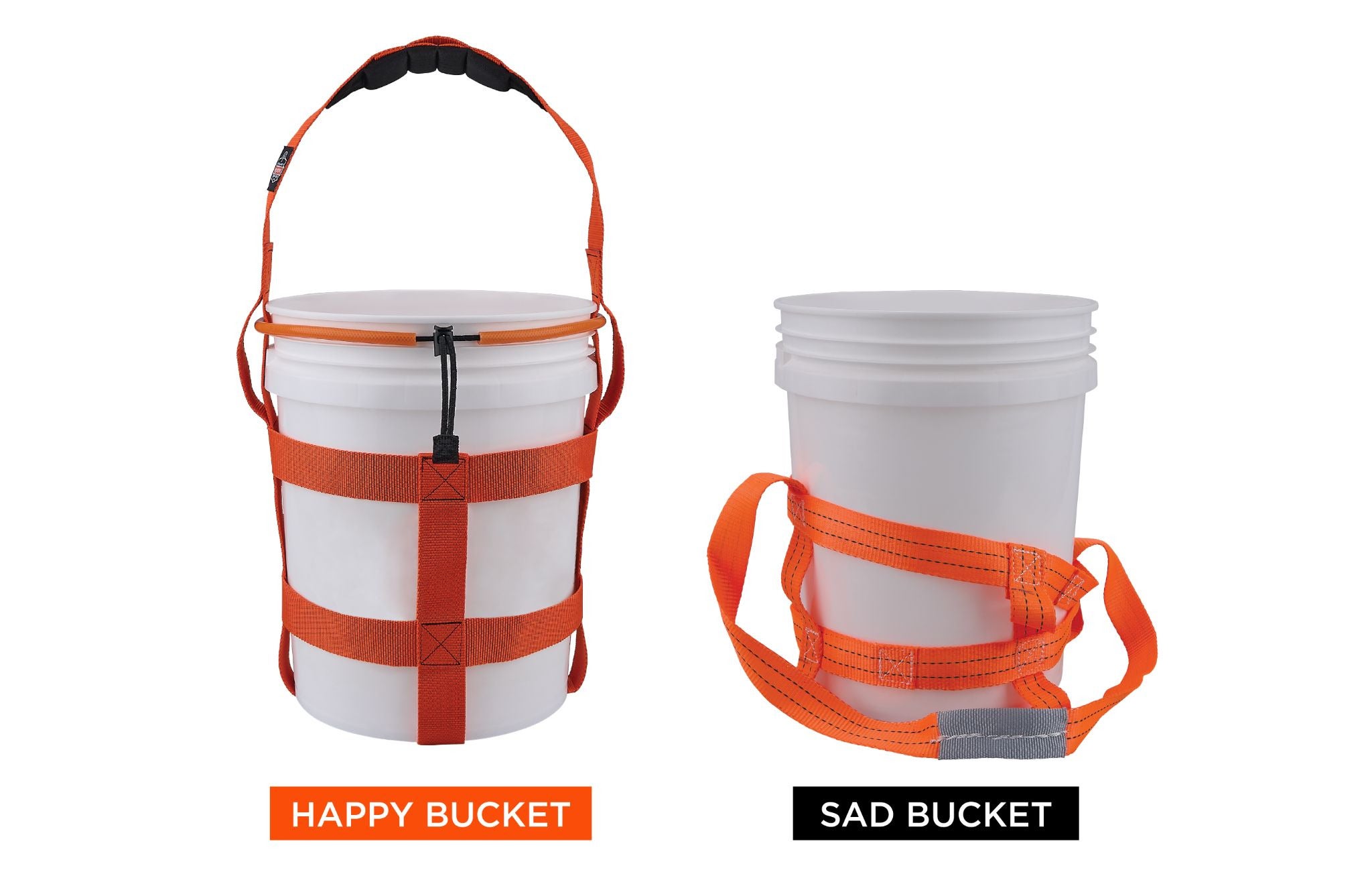
When buckets are not in use, the sling and carry handle remain upright and in place, so it doesn’t slide down the side of the bucket like an ill-fitting toolbelt. This means workers don’t have to waste valuable time or effort repeatedly bending down to adjust straps or reposition handles before getting back to work.
In It for The Long Haul
The 5-gallon bucket isn’t going anywhere anytime soon—and there are many reasons why. They’re practical, affordable, versatile and effective. But just because something is an indelible part of nearly every jobsite doesn’t mean it has to maintain the status quo.
Even the simplest things can always be made better if you just listen to workers, hear their needs, and work tirelessly (and tenaciously) to address them.
Shop all Ergodyne Carrying and Lifting solutions here.