Livin' the Sub-Z Dream: Ergodyne Cold Storage Gear Takes the Lead In Facilities Nationwide
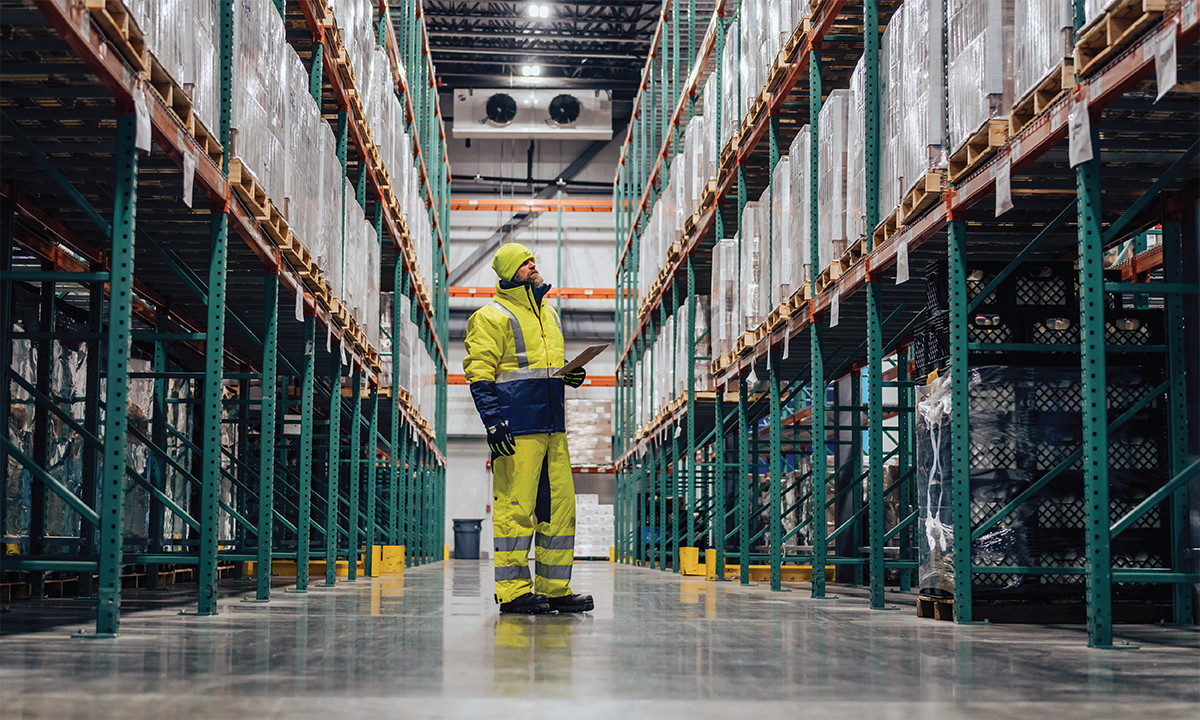
Step inside a cold storage facility and you’ll feel it instantly.
Sub-zero temps combined with the kinetic buzz of controlled chaos pushing both people and their gear to the limits.
And as one of the fastest growing sectors in the supply chain and logistics space, cold storage presents a rapidly expanding opportunity to not only supply the demand for thermal gear, but build something better for the millions of essential workers managing the flow of everything from frozen food to lifesaving medications.
“…NOT ONLY MADE FOR THEM, BUT WITH THEM”
Across the country, facilities are recognizing that outdated gear no longer meets the demands of today’s workforce. They need PPE that delivers warmth, flexibility and confidence, shift after shift.
“We’ve built this collection directly with the folks who do it, day in and day out,” said Claudia Weber, the product manager charged with building Ergodyne’s rapidly expanding cold storage collection. Weber credits the quick adaption by major players in the cold chain space to her team’s relentless focus on what crews really need. “I think it’s resonating because they know it was not only made for them (the workers), but with them, too.”
Field testing with real cold storage teams, ongoing feedback loops and on-site observations ensure every feature is grounded in real-world utility. An easy-to-miss but impactful example of this process are the exterior sizing labels found on outer layers, which allows for instant ID off the rack.
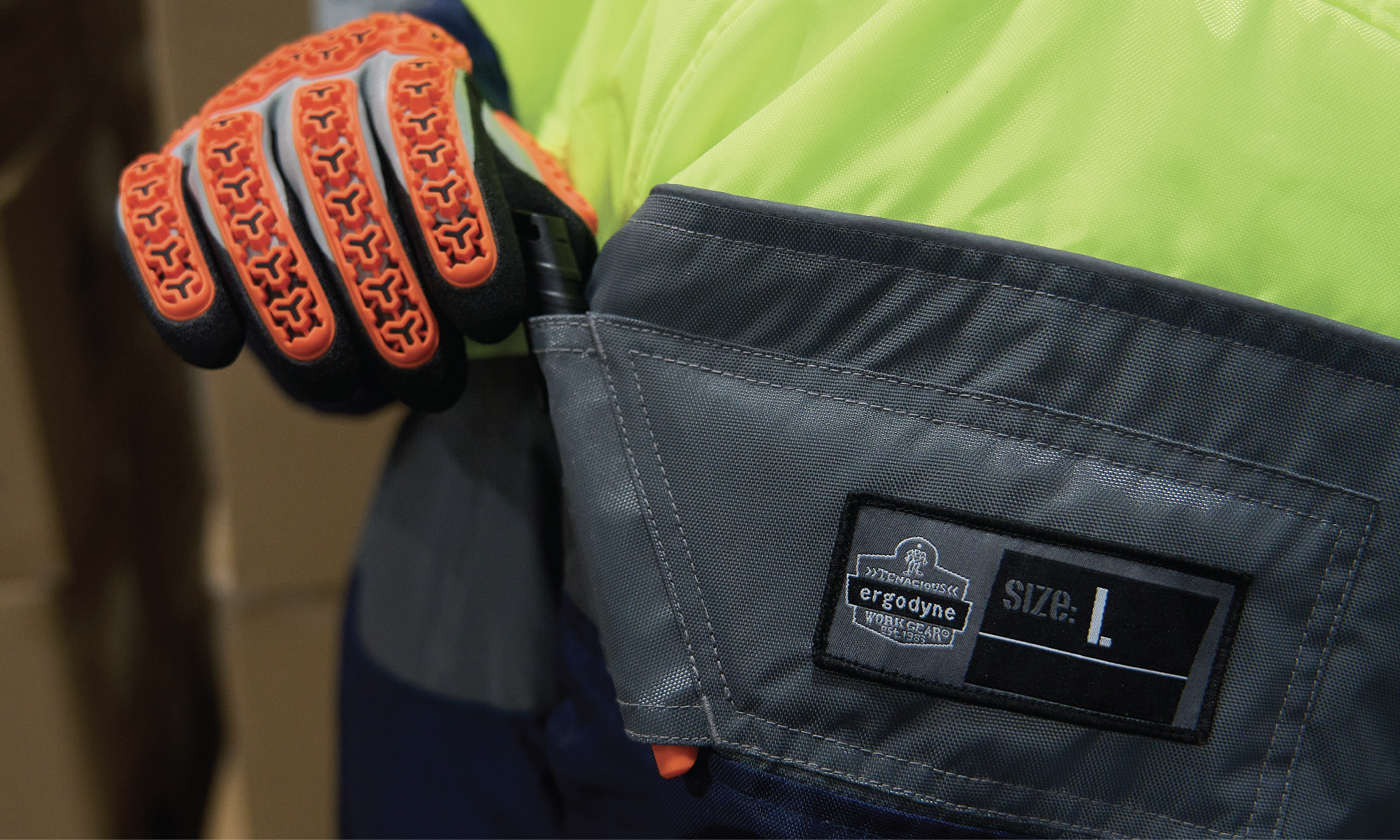
“Seems like not a huge deal,” said Weber. “But to the workers sifting through the gear every day to find the right size, it is.”
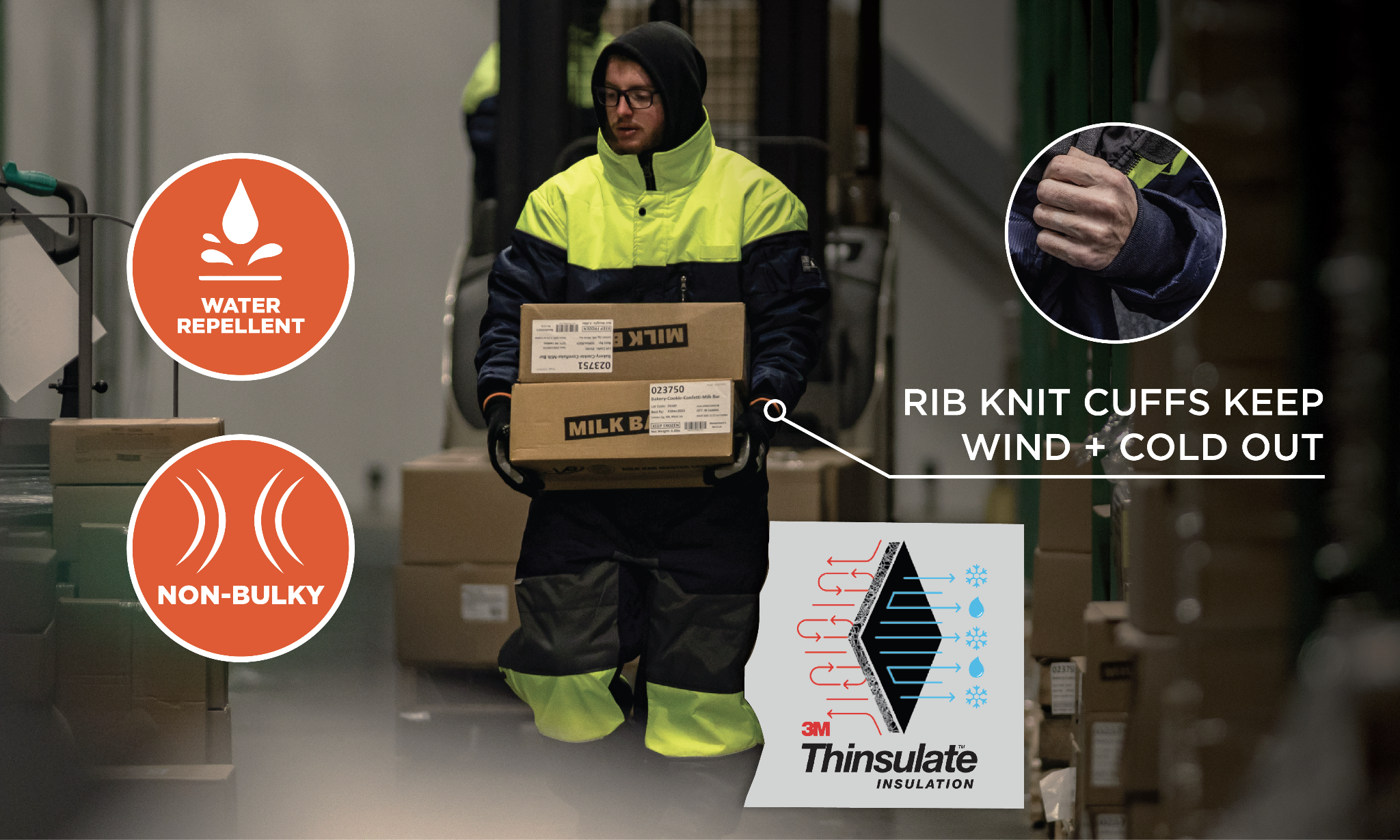
Additionally, there’s a common misconception that bulkier means better when it comes to staying warm. “A lot of folks think our gear won’t be as warm because it’s thinner,” said Weber. “But they quickly learn that’s not the case”.
We visited the fine, frosty folks at Winnesota Multi-Temp Delivery & Storage and asked them to put our Cold Storage Collection to the test.
They then gave us their unfiltered, on-the-spot takes.
These are their stories...
The 3M™ Thinsulate Insulation found in much of Ergodyne’s collection retains more warmth with 30% less bulk and holds up to more laundry cycles than the generic polyfill used by leading competitors.
That last part might just be the most important—at least from a facility manager’s perspective. Durability. Repeated laundry cycles have a notoriously deleterious effect on insulation performance over time by diminishing the insulation’s “loft”. Think of loft as the fluffiness of an insulating material that creates air pockets to trap body heat. After so many wash cycles, those pockets get flattened, reducing their heat-trapping properties.
TRANSPARENCY AS A COMPETITIVE EDGE
As cold storage PPE demand heats up, so does confusion around one of the most asked questions in the industry: what do temperature ratings actually mean?
"There's a lot of misinformation—and even more misunderstanding—about what temperature ratings truly represent," said Ergodyne President, Greg Schrab. “We’re committed to educating our users and helping them make informed decisions based on the best information available, not assumptions.”
Al:
We're here in a cold storage facility to unpack temperature ratings in thermal gear. Okay, so what goes into a temperature rating? Well, it's really an equation of three variables, right? You have your insulation, which is measured by something called CLO. You have your activity levels, which is measured by something called MET Activity Level.
And then you have the time factor. That's how much time you are out in the cold, right? So you put insulation plus activity level plus time and that equals your temperature rating. So when we're talking about CLO, again, that is really measuring the effectiveness of your insulation and how warm it is. Very simple math there, the higher the CLO, the warmer the insulation.
Okay, so one CLO is equal to the amount of insulation that allows a person to rest comfortably at 70 degrees Fahrenheit. For context, your typical flannel shirt measures about 0.30 CLO, while the average down jacket measures about 0.55 CLO. Cold storage gear like Ergodyne’s new freezer jacket and bibs features a toasty 2.59 CLO. So CLO values are tested and determined in controlled environments, right?
So they're using thermal mannequins equipped with sensors that actually simulate human heat production and sweat patterns. Now, when it comes to activity level, that is measured again by something called MET Activity Level, and you can either be light, moderate or high, very active. MET stands for Metabolic Equivalent of Task that's defined as the ratio of your working metabolic rate relative to your resting metabolic rate.
It's really one way to describe the intensity of an exercise or activity. So again, MET levels are classified as either light, moderate or vigorous. So on the light end, that's measuring less than 3 METs and that would include jobs like forklift drivers or, say, equipment operator. The moderate MET levels are measured between three and six METS. On the moderate side you would have your pickers and packers and maybe delivery folks. And then on the vigorous side of things, which is more than six METs, you have people doing high activity work, right? So think about concrete demo or tower climbers. And then the third variable is, of course, how much time you are in the cold and exposed to the cold.
The longer you're in the cold, your temperature rating is going to dip. Okay, so there you have it, Insulation plus activity, plus time put them all together and you've got your comfort equation, right? Good basis for temperature ratings, but it's not that easy. There's a whole host of other variables that go into affecting the thermal performance of any sort of garment.
And to sort of help parse out those variables, we brought in our expert, Claudia Weber. She is part of the Ergodyne Innovation Team charged with designing and testing our thermal work gear. Welcome, Claudia.
Claudia:
Hi. Thanks for having me.
Al:
It's a pleasure to have you. So why isn't it that easy, right? If something is rated to -50, why can't we just bank on that?
Claudia:
Yeah, because everybody is a little bit different. You and I could go into the same cold storage environment wearing the same gear, and we're two different people, and we might feel a different sensation when we're in there. So there's a few factors that I like to think about. One is, how old are you? So somebody who is older is actually more at risk for having a cold related illness.
Somebody who is overweight is also actually at a higher risk. Something to think about. If you have a medical condition. So just giving an example, Hypothyroidism, diabetes, sometimes those types of medical conditions can actually lower your circulation rate. And so in turn, you might have a harder time staying warm in the same exact environment that another person would be in.
Another thing to think about is hydration levels. So it's so easy in the summer when it's hot to be chugging water, but when it's cold or you're working in a cold storage environment, you might not be drinking enough water. Our body actually kind of fakes us out and tells us that we don't need as much when we get cold because all the blood vessels are kind of getting thinner towards the extremities of our body and the blood is rushing to the core of your system.
So it's protecting your heart, your lungs, your brain. So sometimes back to what I'm saying is we often don't think that we need water when we do. So that's important to think about.
Al:
So a lot of different physical factors. One example that that comes up a lot is like sleeping bags. Right? Sleeping bags are like, well, those are rated to -30 Fahrenheit, and, you know, that is a pretty stable rating. People can count on that. But there are a bunch of environmental factors too that go into thermal ratings, right?
Whereas if you're in a sleeping bag, you're likely in a tent. You're not moving around. There's not any wind. What can you tell us about maybe some environmental factors that are mixed in with those physical factors you were just talking about?
Claudia:
Yeah. So I think the environmental factors are a bit more obvious. So if you're working in damp air, if there's a lot of wind. So I never thought there would be wind in a cold storage environment, but they have those stands running. It is cold. And then you stand in front of the wind and it's even colder.
So that's a big factor. Of course, just the temperature that you know, that it's set to if you're outside or inside. Those are some big ones. If you're also working on machinery, that is cold itself. So metal, think of that. Those are just some environmental factors. So you kind of need to combine the personal as well as the environmental.
When considering, how is it going to affect you as a person?
Al:
Yeah, absolutely. That makes a lot of sense.
Claudia:
And I don't want to forget too. Also, if you don't get enough sleep or you're drinking, you're boozing hard the night before you took drugs, that can definitely affect how you feel the next day as well.
Al:
Okay. All right. So then, all that in mind, what advice would you give to workers that are looking for the proper thermal gear to wear?
Claudia:
So a few things that I personally would look for is you want to look at the temperature rating. We have it there for a reason, but it is a guideline, it is a benchmark. It is not the end all be all for every single person. So look at it. See if it fits in the environment that you're working in.
Two is use this garment and try to test it, bring it to your facility, see if it works for you. Every facility is a little bit different and every person is different as well as don't use this garment as the only garment you're wearing. You are wearing something underneath it. So consider layering wear your base layer, your mid-layer, wear insulated boots, etc. maybe wear the hand warmers if you know your fingers get colder during the day or wear foot warmers if your feet naturally get colder.
I also would make sure you're wearing properly fitted PPE. So let's say you're the last worker. You grab the jacket and it's three sizes too big. Well, it's going to be baggy. You're going to get a ton of wind and air going through your garment. And in turn, you're probably going to be colder than the rest of the workers.
So make sure it fits properly.
Al:
All right. I think that's some pretty good advice for the folks out there. Once again, I want to thank you all for watching. Listening. If you're listening to this on Spotify or Apple, please do remember that you can catch a video version of this on YouTube or ergodyne.com. Thanks again, everybody, for watching, listening and stay safe out there people.
“Just like any PPE, cold storage crews need the proper information about their thermal gear to make the right choice for their application,” Schrab continued. “That’s why we’ve always been as serious about education as we are about innovation.”
THE POWER OF PARTNERSHIP
Superior gear and surprisingly refreshing levels of transparency are one thing, but impacting the industry at scale is quite another. That’s where relationships mean everything. And one leading channel partner just so happened to approach with an opportunity: the chance to trial the new cold storage collection versus the incumbent at one of a major retailer’s 55 nationwide facilities.
Ergodyne’s cold storage jacket, bibs, coveralls and gloves were tested against the existing thermal clothing manufacturer. The result? Crews preferred the fit, comfort and durability over the existing gear.
The facility has since begun phasing out the old guard in favor of Ergodyne through the channel partner. But the win hasn’t stopped there: two additional facilities have already made the switch with trials underway to more sites across the full network of 55.
BUILDING MOMENTUM
At another cold storage site in the Pacific Northwest, the facility team reached out looking for better protection and performance in sub-zero conditions. Following an on-site visit and in-depth product discussions, the entire crew was transitioned into Ergodyne thermal gear.
Since then, interest has grown across related sites, and the team at Ergodyne is actively working to expand the opportunity, following a similar pattern of success.
The word is getting out. When it comes to cold storage, Ergodyne is a reliable option that consistently delivers when it matters most.
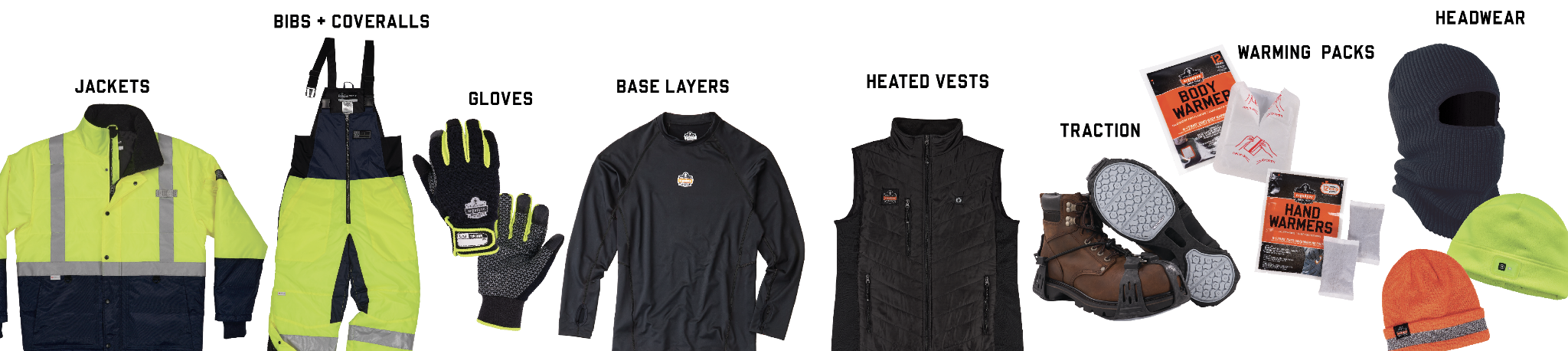
KEY COLD STORAGE GEAR MAKING AN IMPACT
- N-Ferno Insulated Jackets
- Ergodyne insulated jackets feature high-loft insulation and water-resistant shells that lock in warmth even in sub-zero environments like cold storage. With adjustable cuffs, reinforced seams and strategically placed pockets for tools or hand warmers, they’re engineered to keep workers protected, comfortable and productive.
- N-Ferno Bibs // Overalls
- Ergodyne bibs and overalls are designed with smart functionality in mind, featuring zip-to-waist legs for easy on-and-off over boots and reinforced knees for added durability. Reflective accents enhance visibility in low-light environments, while breathable insulation helps regulate body temperature during demanding work. Built for maximum warmth and mobility in freezing conditions, they feature durable, water-resistant shells with heavy-duty insulation for a comfortable, all-day fit.
- N-Ferno 6475 Insulated Freezer Coveralls
- These insulated freezer coveralls deliver superior warmth, durability and comfort. With 200g of 3M™ Thinsulate™ insulation, a tough ripstop polyester shell and water-resistant PU coating, these coveralls are rated from -10°F to -50°F (-23°C to -46°C). With multiple pockets, leg zippers for easy on/off, adjustable cuffs and hi-vis reflective details, this design provides reliable protection and mobility.
- ProFlex 850 Insulated Freezer Gloves
- These insulated freezer gloves combine warmth, grip and dexterity for demanding environments, featuring 150g insulation rated for -5°F to -20°F (-21°C to -29°C). With silicone-patterned palms, reinforced thumbs, touchscreen compatibility and reflective accents, these gloves deliver durable protection, comfort and visibility for all-day performance in extreme cold.
- ProFlex 7402 Thermal Knit Cooler Gloves
- These thermal knit cooler gloves deliver all-day warmth and flexibility with a dual-layer acrylic-polyester construction and silicone-patterned palms for a secure grip on cold items. Designed for precision and durability, they feature a reinforced thumb saddle and snug elastic cuffs, making them ideal for cooler storage work.
MORE THAN JUST [REALLY GOOD] GEAR
From intensive inventory and supply chain stewardship to value-add programs (like logo services and worksite field support), the benefits that channel partners—and their customers—find with Ergodyne go well beyond the gear.
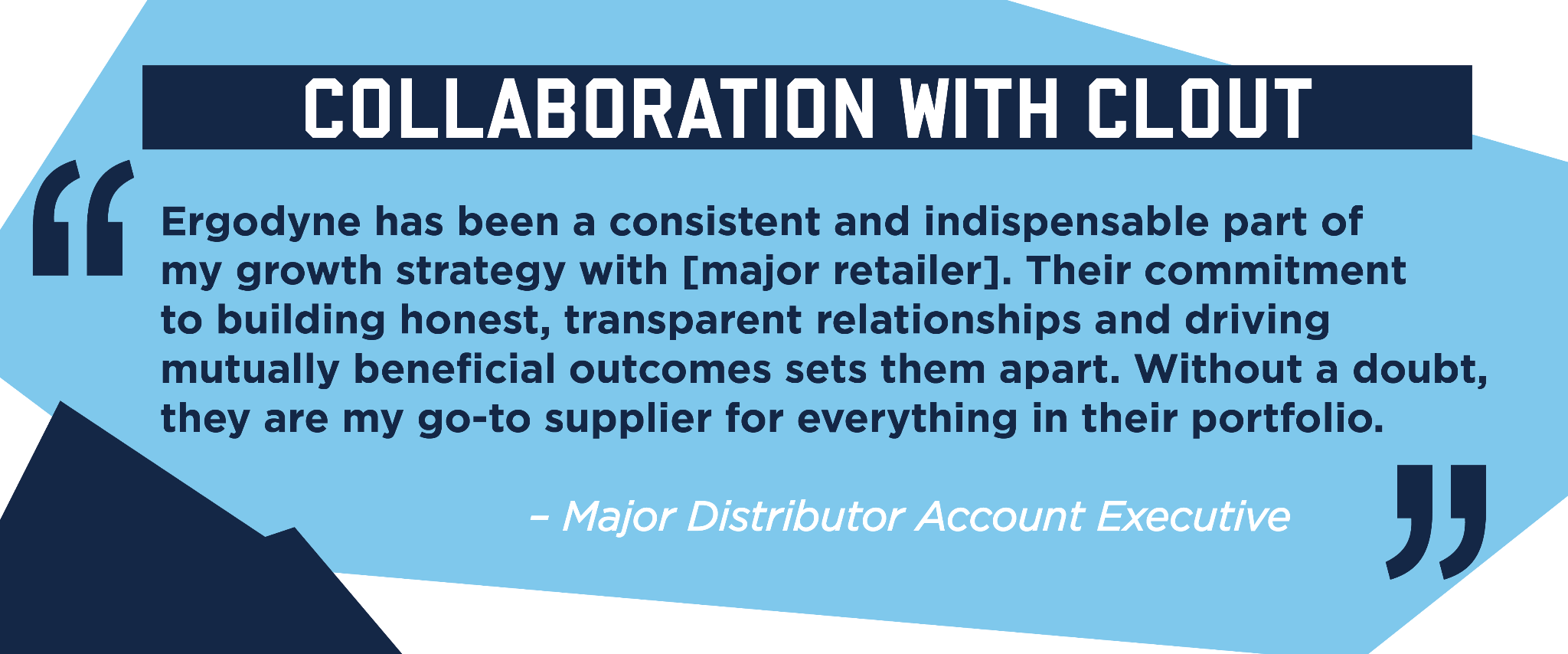
It all adds up to not only safer, more productive people, but a stronger bottom line for everybody involved.