
Photochromic Safety Glasses: Built for Changing Conditions

Work doesn’t happen in one kind of lighting. It’s constantly changing, from warehouse floors and loading docks to rooftops in full sun, early mornings before sunrise, and jobsites that start dark and overcast before shifting into harsh afternoon glare.
That’s where the problem shows up. The lens you’re wearing is almost never the right one for every part of the day.
Clear lenses work fine indoors, but once you step outside you’re squinting. Tinted lenses are great in the sun, but make indoor work harder than it needs to be. And even though switching between the two sounds simple, most people don’t end up doing it. They just stick with one pair and deal with it.
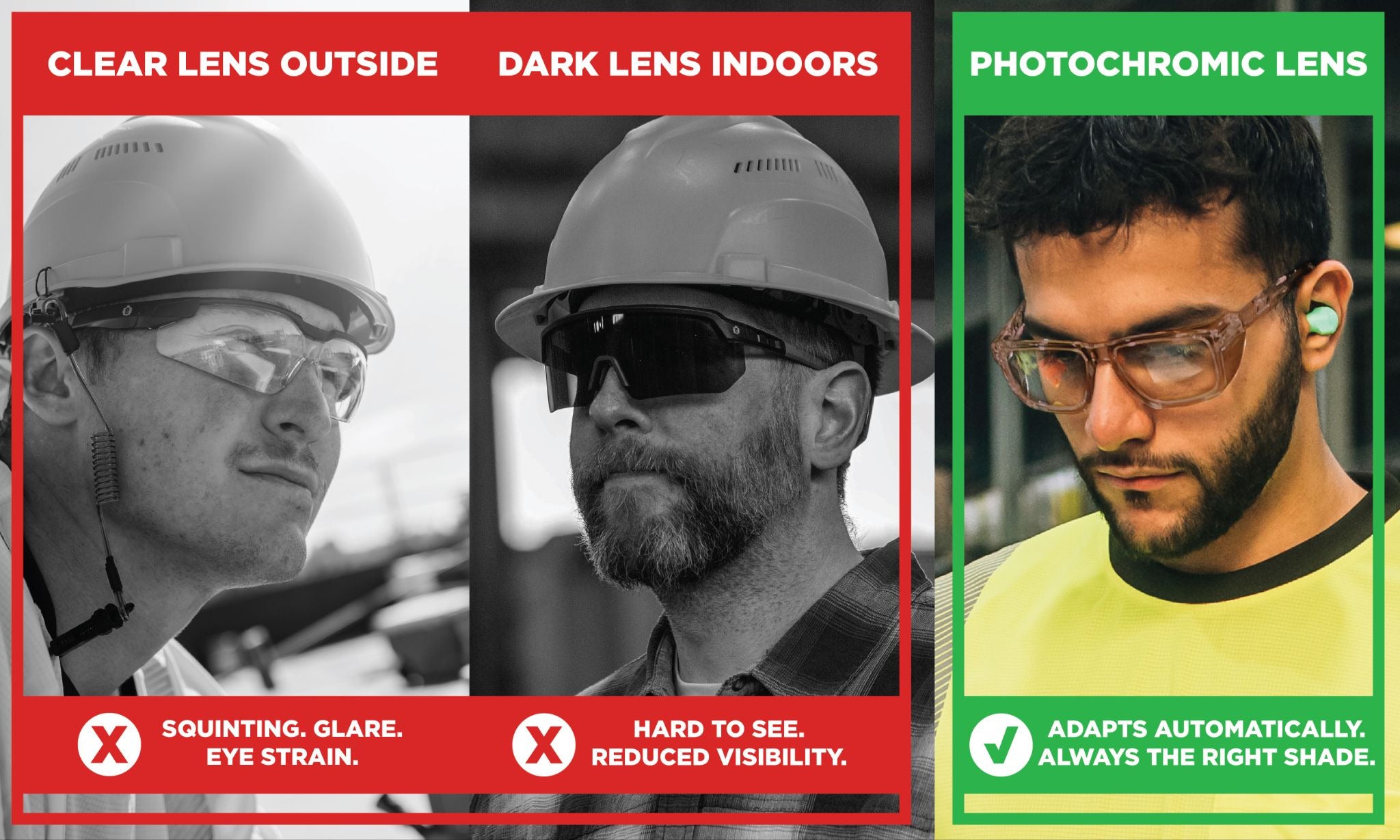
Photochromic safety glasses take that decision out of it. The lens adjusts as the light changes, staying clear indoors and darkening outside so you’re not constantly thinking about swapping gear or fighting the conditions.
What are Photochromic Lenses?
Photochromic lenses are designed to adapt to changing light automatically.
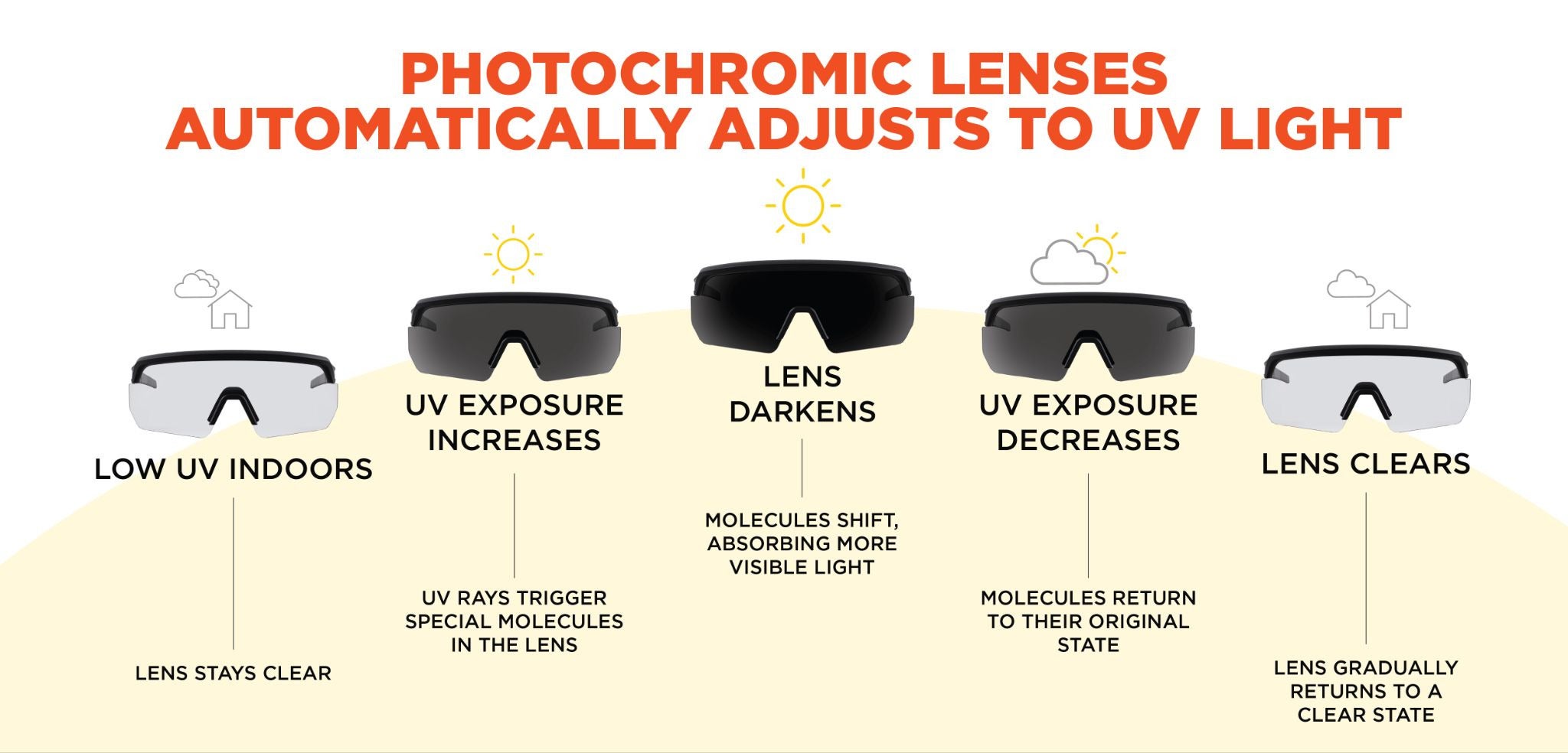
When they’re exposed to higher levels of ultraviolet (UV) light, the lenses darken. Once the UV exposure lessens, they gradually return to a clearer state. So indoors they stay mostly clear, and outside they tint darker without the wearer needing to switch glasses.
Also known as transition or auto-tint lenses, they’re most useful in environments where lighting changes constantly. For example, moving between sunlight and shade, or indoor to outdoor spaces.
The easiest way to describe them? They are lenses that adjust on their own based on the light around you.
How Do Photochromic Lenses Work?
It all comes down to how the lens reacts when it is exposed to increased or decreased levels of (UV light).
When UV rays hit the lens, they trigger special molecules built into the lens material to shift their structure, causing the lens to absorb more visible light, and in turn, making the lens darken. The more UV exposure there is, the darker the tint becomes.
Once the UV light fades, the process reverses. The molecules in the lenses go back to their original form, and the lens gradually clears again.
When Should You Use Photochromic Safety Glasses?
Photochromic lenses make the most sense to use when you are frequently switching between different lighting levels often throughout your workday or shift. For workers moving in and out of buildings, working between shade and direct sun or starting in low light and finishing in full daylight, photochromic lenses are an excellent option.
Specific job applications where photochromic lenses are especially helpful include construction, utilities, airport ground operations, warehousing and loading docks, landscaping, transportation, field service and telecom. Put simply, any role where the work takes you across different environments throughout the day.
Because that’s the reality: light changes faster than most people are willing to swap eyewear.
How Long Do Photochromic Lenses Take to Transition?
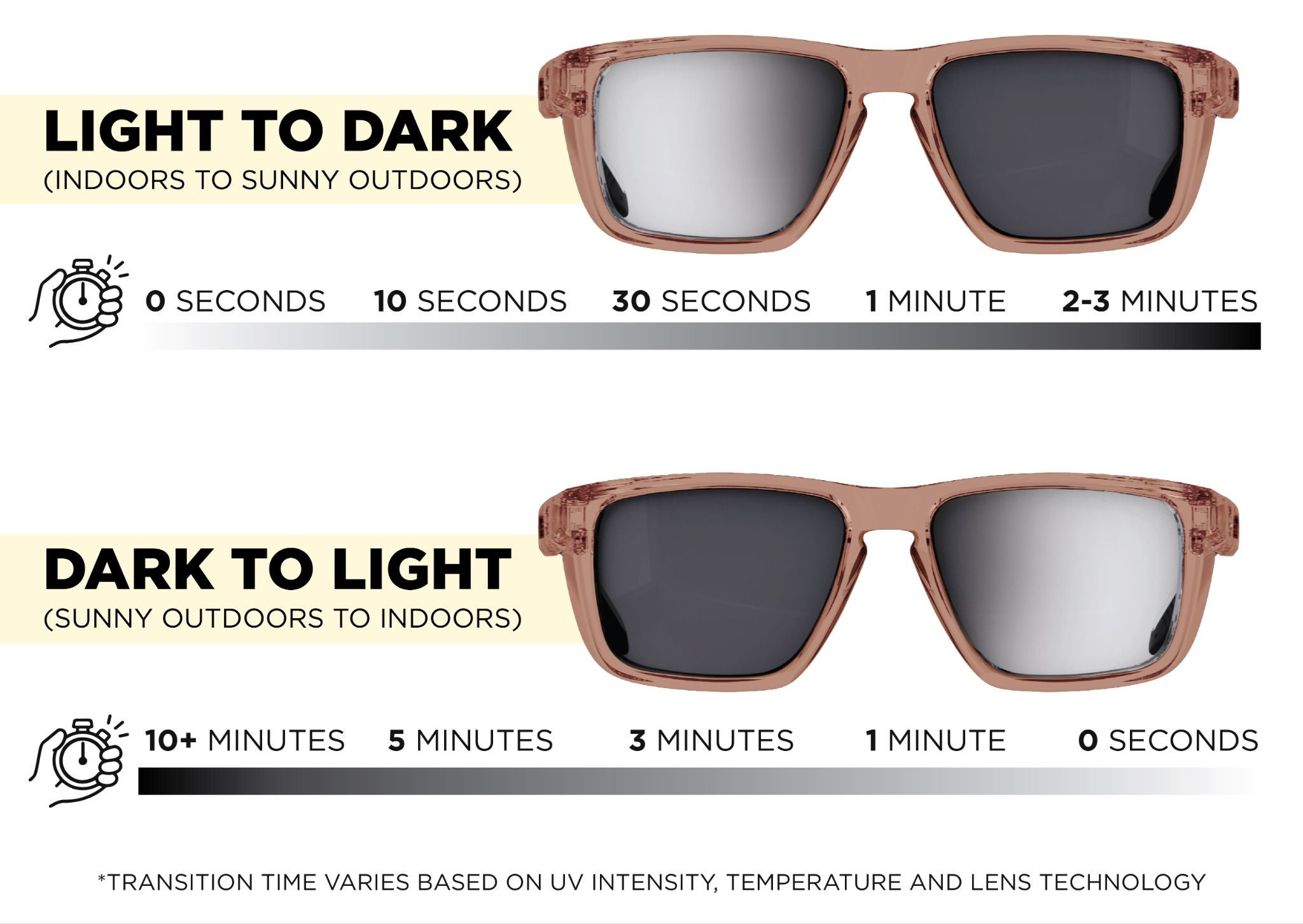
Photochromic lenses don’t change instantly, but the goal is that they transition fast enough to keep up with jobsite conditions. The key is understanding how they behave in both directions so workers can be prepared.
Light to Dark
This is the faster transition. When you step into UV light, the lenses start reacting almost immediately. You’ll usually notice them beginning to darken within seconds, with the tint continuing to build over the next 30 seconds to a few minutes. How dark they get and how quickly completely depends on the glasses and the UV intensity.
Dark to Light
Clearing back up takes a bit longer. Once you’re out of direct UV, the lenses begin to lighten within about 1-3 minutes. From there, it can take several more minutes to return to a fully clear state.
Does Temperature Affect Transition Time?
Short answer: Yes, temperature plays a real role in how photochromic lenses perform.
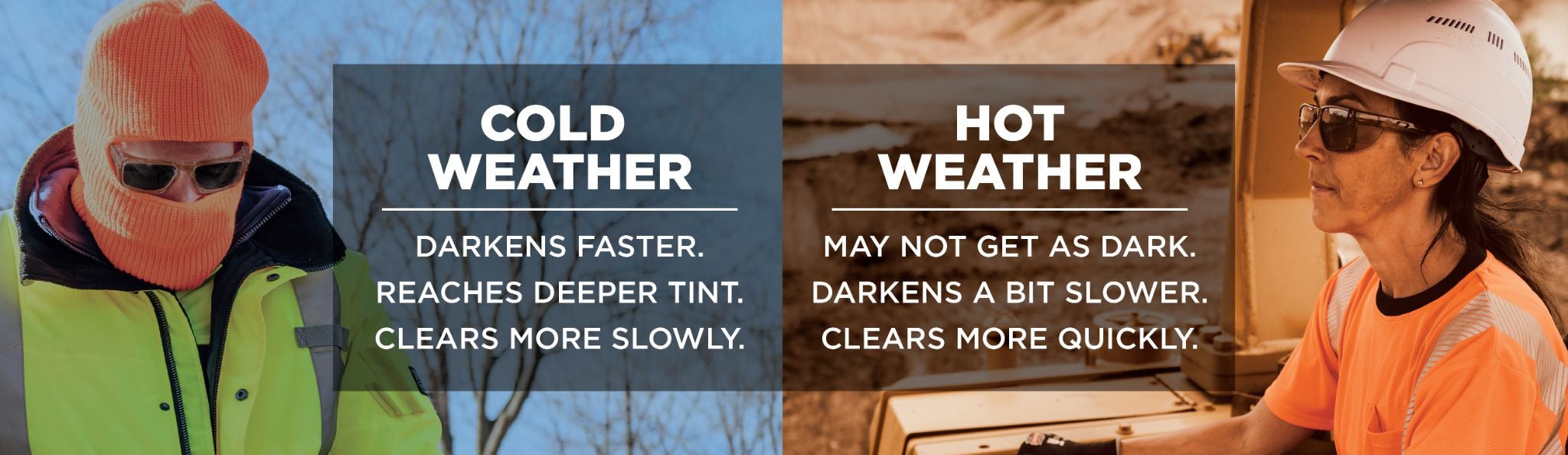
Cold Weather
In colder conditions, photochromic lenses tend to react more aggressively, meaning they often darken faster and reach a deeper tint. But the tradeoff is that they also clear more slowly once UV exposure drops.
That’s why you’ll notice strong performance in environments like winter utility work, outdoor construction in cold climates, snow-covered jobsites where glare is constant, loading docks in Midwest winters and cold storage or freezer work.
Hot Weather
In higher temperatures, the behavior shifts slightly. Lenses may not reach quite the same maximum darkness, and the darkening process can be a bit slower. On the flip side, they typically return to a clear state more quickly once you step out of the sun.
Think summer roofing jobs, hot asphalt work or long shifts in direct sun where heat is constantly working against you.
What Do Photochromic Lens Categories 0–4 Mean?
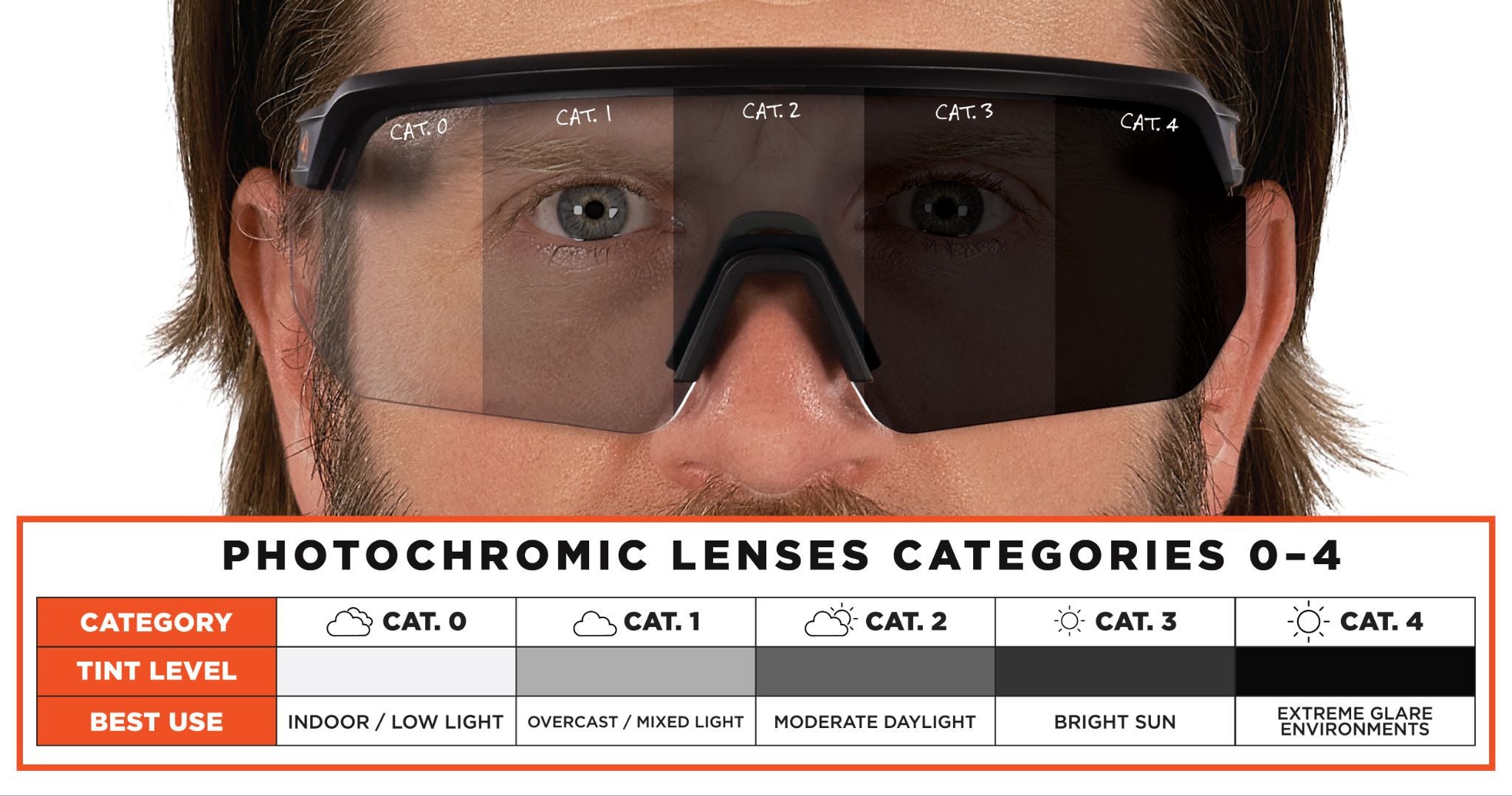
Photochromic lenses are grouped by “category,” which describes how light or dark the tint gets. It is a range, from nearly clear to very dark, based on lighting conditions.
Tint Categories
| Category | What It Means | Best Use |
| 0 | Nearly Clear | Indoor, low light |
| 1 | Light Tint | Overcast or mixed light |
| 2 | Medium Tint | Moderate daylight |
| 3 | Dark Tint | Bright sun |
| 4 | Very Dark Tint | Extreme glare environments |
What This Means on the Job
Most photochromic safety eyewear used on worksites is designed to shift through the 0-3 range. In practice, that covers most real conditions you run into, moving between indoor spaces and full daylight without needing to change lenses.
Category 4 is usually reserved for extreme glare where you need much darker protection, but it is not something most people rely on in day-to-day work.
What Is Visible Light Transmission?
Visible Light Transmission (VLT) is a simple way to measure how much light passes through a lens.
It’s expressed as a percentage:
- Higher VLT = more light gets through (lens appears lighter)
- Lower VLT = less light gets through (lens appears darker)
VLT in Photochromic Lenses
Photochromic lenses don’t have one fixed VLT. It adjusts automatically based on lighting conditions. In the clear state, the VLT of the glasses is high, letting in more light for increased visibility in indoor environments. In the dark state, the VLT drops, blocking more light and reducing glare outdoors. That dynamic range is what allows the lens to shift between environments without swapping eyewear.
Why VLT Matters on the Job
VLT directly affects how you see and how your eyes feel over the course of a shift. It influences visibility in changing light conditions, eye fatigue during long wear and overall comfort when experiencing mixed lighting conditions. The right VLT range helps your eyes work less, especially in jobs where conditions are constantly shifting.
Why Photochromic Lenses Make Sense for Real Work
Instead of swapping between clear and tinted eyewear every time a job requires a worker to move from one lighting condition to another, workers get a single pair that adapts as their conditions change. That alone adds efficiency to the workday.
Less switching means better wear compliance. Workers are more likely to keep their eye protection on when it actually works across different conditions. It also means fewer distractions from glare and shifting light, which reduces eye fatigue over long shifts. Whether moving between indoor and outdoor spaces or working through changing weather, the lenses adjust automatically without slowing down any work.
The end result is simple: one solution that supports productivity, safety and comfort.
Check out Ergodyne’s photochromic lenses here.
FAQ
Photochromic lenses contain microscopic molecules—typically silver chloride or silver halide—that change structure when exposed to ultraviolet (UV) radiation. In bright sunlight, these molecules react and darken the lens; when you move indoors or away from UV light, they absorb less light and return to a clear state.
Photochromic safety glasses eliminate the need to constantly swap between clear glasses indoors and tinted sunglasses outside, providing seamless eye protection as you transition between environments. Beyond convenience, they reduce eye strain and fatigue caused by sudden glare changes, maintain continuous impact and UV protection without a break in safety compliance, and ensure workers never compromise their vision by lifting glasses to see better in darker or brighter spots.
Visible Light Transmission (VLT) is the percentage of light that passes through a lens and reaches your eyes. A lower VLT percentage means a darker tint that blocks more light (such as a 10% VLT sunglass lens), while a higher percentage means a lighter tint that lets most of the light through (such as a 90% clear lens).
VLT directly governs visual clarity, contrast, and safety compliance depending on your working conditions. Using a lens with a VLT that is too low for a dim indoor workspace can drastically impair visibility and lead to accidents, while using a high VLT outdoors on a bright day allows excessive glare, causing squinting, headaches, and temporary blindness from flash glare.
Standard photochromic lenses darken in response to UV light, but modern windshields and equipment glass are typically treated with UV-blocking coatings. Because very little UV light penetrates the glass, traditional photochromic safety glasses usually will not darken adequately inside a vehicle. Some specialty lenses react to visible light as well, but standard ones require direct sunlight.
Photochromic technology is temperature-sensitive. The molecules move more freely in warmer temperatures, which can cause the lenses to appear slightly lighter even in bright sunlight. Conversely, in freezing winter conditions, the molecules slow down, causing the lenses to darken significantly and take longer to fade back to clear when returning indoors.