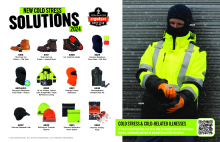





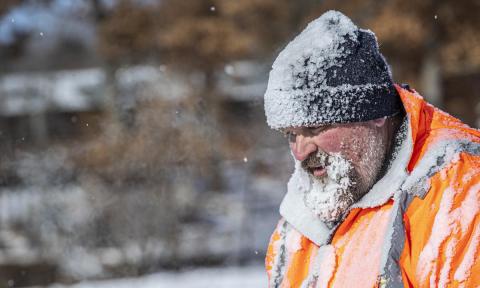
COLD STRESS & COLD-RELATED ILLNESSES
As cold weather patterns become more unpredictable, no region is immune to a debilitating Polar Vortex—making it more important than ever to be able to identify common cold stress injuries, treatments and how to prevent them in the first place.
COMMON COLD STRESS INJURIES
Learn the symptoms the treatment, and how to prevent these potentially life-threatening illnesses.
Frost Bite
How It Happens
Blood leaves extremities to protect vital organs
Symptoms
White/gray/blue skin, cold/hard/waxy skin, itching, burning, numbness, blistering
How to Treat It
Move to warm area, place extremities in warm water or wrap in warm blanket, seek medical attention.
Hypothermia
How It Happens
Core body temperature falls below 95° F (35° C)
Symptoms
Shivering, poor coordination, confusion, slurred or slowed speech, hallucinations
How to Treat It
For mild cases, move to warm area and stay active. For moderate to severe cases, seek medical attention.
Dehydration
How It Happens
Not drinking enough fluid to replace what is lost
Symptoms
Fatigue, lightheadedness, muscle cramps, confusion, dark & strong-smelling urine
How to Treat It
Replace lost fluids and electrolytes with water, sports drinks or juice. Drink 5-7 ounces every 15-20 minutes throughout the day.
COLD STRESS PREVENTION
BETTER LIVING THROUGH LAYERING
Working safely in bitter cold conditions requires planning, regular breaks to warm up and layering up in the right PPE.
What is the best layering for cold weather?
What you might not know, is that the number one problem workers have when working out in cold conditions is actually overheating. That's because once you start working and you do not have a smart layering system, there is no place for that heat to go. And you're in for a sweaty spiral of regret. No single magic garment can adapt like a proper layering system.
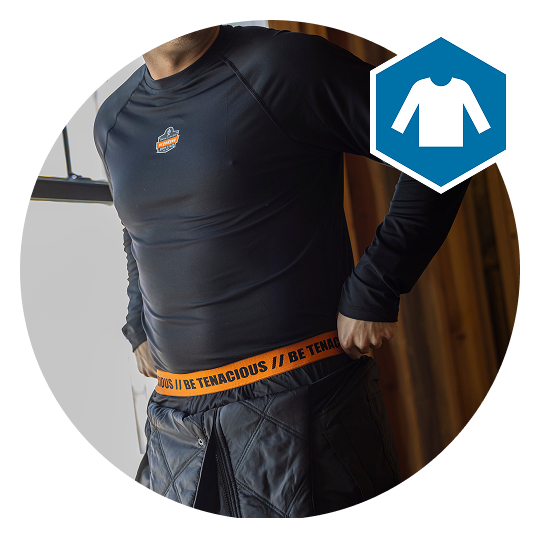
Base Layers
Starting with a moisture-wicking, quick-drying layer is key.
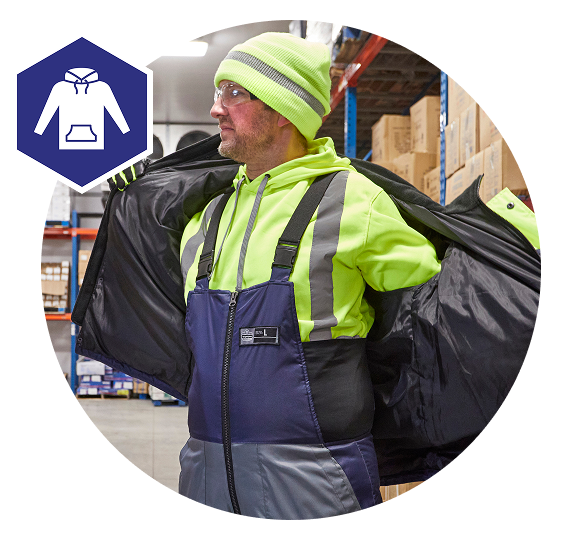
Mid Layers
Traps body heat + allows workers to remove or add layers as needed.
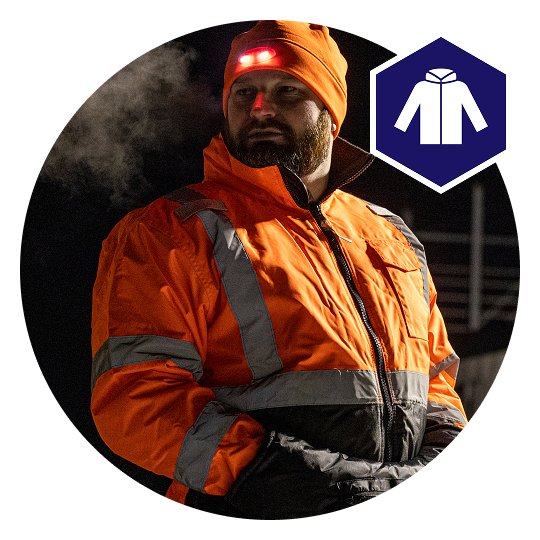
Outer Layers
Durable, breathable layer made to stand up to tough use and provide added warmth.

Base Layers
Goal
A moisture-wicking, quick-drying layer
What They Do
Allow sweat and moisture to escape to prevent overheating
Base Layers
Mid Layers
Goal
Allows workers to remove or add layers as needed
What They Do
Traps body heat

Mid Layers

Outer Layers
Goal
A durable, breathable and weather-resistant layer
What They Do
Protects from the elements and provides added warmth
Outer Layers
RESOURCES
GET SMART ON COLD STRESS
Videos, articles, toolbox talks and more… it’s a veritable blizzard of ready-to-share resources to keep crews safe and productive in the cold.
Videos
Podcast
Safety Tips
Decreasing Slips, Trips and Falls: How to Choose the Right Traction Device for the Job
Cold Weather Gear Guide: How to Dress for Work in Winter
Waterproof vs. Water Resistant: How to Choose the Best Work Rain Gear
Why Are My Hands Always Cold?: Your Guide To Choosing The Best Winter Work Gloves
Case Studies
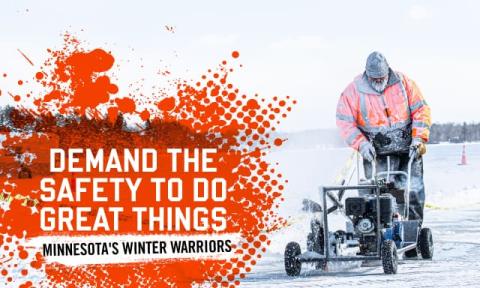
Demand the Safety to Do Great Things: Minnesota's Winter Warriors
Finding Traction on the Tarmac: The Half Decade Search for a Scratch-Free Slip Solution
Toolbox Talks
Smart Scheduling For Winter Work Safety – Toolbox Talks
Recognizing Hypothermia, Frostbite And Other Common Cold-related Illnesses – Toolbox Talks
Guides & Documents
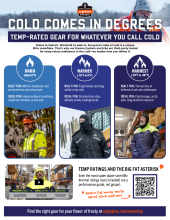
Gear for Above 0°F
Gear Rated for -19°F to 0°F
Gear Rated for -20°F to -60°F
Thermal Headwear
Thermal Hats, Headbands and Gaiters
Thermal Hard Hat & Safety Helmet Liners
Thermal Bump Caps
Waterproof Thermal Gloves
Breathable Thermal Gloves
Insulated Thermal Gloves
Run Extra Cold? Add Instant Warmth
Anti-Fog Eyewear
Polarized Eyewear
FAQ
There is currently no federal OSHA regulation, but… the General Duty Clause states that employers must provide a safe and healthful workplace for workers.